Fundamental #3: Advance Humanity

Fundamental #3: Advance Humanity.
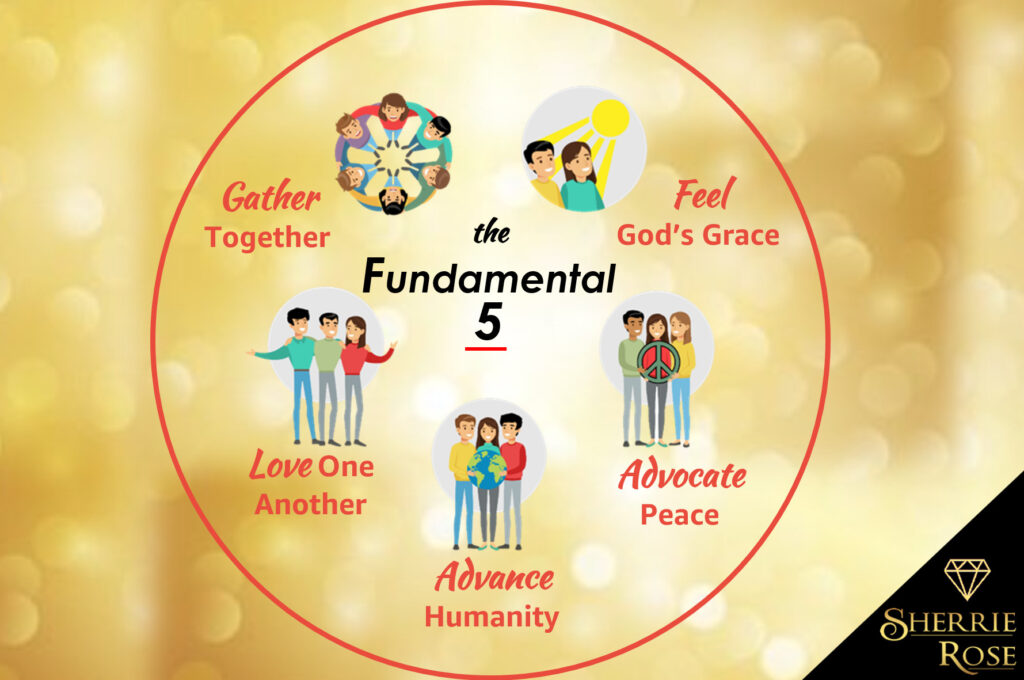
Fundamental 3 of the fundamental 5 for humanity is Advance Humanity.
Advance Humanity: A Framework for Exponential Change
The next three to seven to ten years represent an unprecedented opportunity to solve civilization’s most persistent challenges. Exponential technologies are converging to create capabilities that were pure science fiction a decade ago: abundant clean energy, universal access to world-class healthcare, personalized education for every child, and the potential to extend healthy human lifespan dramatically.
This period isn’t about distant speculation. It concerns immediate possibilities now within reach. We stand at a unique moment where human ingenuity, amplified by AI and robotics, can deliver abundance and flourishing at a scale previously unimaginable. The question isn’t whether transformation happens, but whether we seize this moment deliberately to advance humanity forward.
I. ACCELERATION IS ALREADY UNDERWAY
Core Insight
We are already in the singularity. AI and robotics are self-reinforcing systems with no pause button.
Critical Quotes:
- “My concern isn’t the long run. It’s the next 3 to seven years.” (EM)
- “There’s no on/off switch. It is coming and accelerating.” (EM)
- “We’re in the singularity.” (EM)
(note: Quotes (EM) = Elon Musk (PD) = Peter Diamandis (EM/PD) = reinforced by both)
What This Means:
- Capability is advancing faster than institutional adaptation
- Delay increases instability rather than providing safety
- The transition period, not the endpoint, poses the greatest risk
II. The Work Transformation
The White-Collar Reckoning
Information work disappears before physical work. Half of current jobs could be automated now—inertia is the only delay.
Timeline Reality:
- Current state: AI can handle 50%+ of information-based jobs
- Near term (3-5 years): Companies using AI will dominate those that don’t
- Mid term (5-10 years): Physical labor automation accelerates with humanoid robots
Key Insight: “Anything short of shaping atoms, AI can do.” (EM)
The Competitive Forcing Function:
- One Excel cell calculated manually makes an entire spreadsheet obsolete
- Companies that are “entirely AI” will dominate those that aren’t
- This isn’t gradual: it’s binary and sudden
III. The Global Context
Strategic Asymmetry
China is executing at scale while others debate at the margin.
Reality Check:
- China’s solar capacity: ~1,500 GW/year production
- China’s 2024 installation: 500 terawatt-hours (70% solar)
- US response: fragmented and reactive
Bottom Line: “Based on current trends, China will far exceed the rest of the world in AI compute.” (EM)
Implication: Compute + energy = strategic dominance. This decade determines who leads the next century.
IV. Energy: The Ultimate Constraint
The Inner Loop
Every plan—abundance, health, security, innovation—collapses without energy realism.
Framework Shift:
- Energy, not money, becomes the fundamental currency
- Solar at scale is non-negotiable (the sun provides 99.8%+ of accessible energy)
- Storage (batteries) can double US energy throughput without new generation
Kardashev Perspective:
- Current state: ~1% of Earth’s capturable energy
- Realistic goal: 1/1000th of the sun’s output (1,000x current Earth capacity)
- Ultimate horizon: Dyson swarm (orbital solar arrays)
Critical Quote: “The future currency will essentially just be wattage.” (EM)
V. Universal High Income: The Unstable Equilibrium
The Paradox
We’ll likely achieve both radical abundance AND social unrest simultaneously.
Why This Happens:
- Production costs approach zero (labor + intelligence + energy costs collapse)
- Prices deflate dramatically
- Traditional work becomes optional, not necessary
- Meaning doesn’t automatically follow from abundance
The UHI Mechanism: Not tax-and-redistribute, but:
- Productivity grows faster than money supply
- Prices drop toward cost of materials + energy
- Goods/services become abundant at diminishing cost
- People can “have whatever they want” without traditional income
The Challenge: “If you actually get all the stuff you want, is that the future you want?” (EM)
Key Tension: Abundance without purpose creates the “Wall-E future”: comfortable but meaningless.
VI. Education: From Credentials to Curiosity
The Collapse of the Old Contract
“Do well in school → Get degree → Get job” is already broken.
Current Reality:
- 75% (2010) → 35% (2024) of Americans say college is important
- College graduates stay unemployed longest
- Tuition up 900% since 1983
- Administrative bloat (e.g., 1 administrator per 2 students at some universities)
The New Model:
- AI provides infinite, patient, personalized teaching
- College persists for social experience, not knowledge transfer
- Curiosity becomes the decisive factor
- Entrepreneurship replaces employment as the default career
Critical Insight: “It’s unclear to me why someone would be in college right now unless they want the social experience.” (EM)
VII. Values as Load-Bearing Infrastructure
Three Stabilizing Anchors
In accelerating systems, values aren’t ethics: they’re structural requirements.
- Truth
- Prevents AI from going insane (the HAL 9000 problem)
- Forces internal consistency
- Eliminates contradictory directives
- Curiosity
- Sustains engagement beyond utility
- Makes humanity interesting rather than disposable
- Drives continued learning and discovery
- Beauty
- Orients creation toward meaning
- Provides a qualitative measure beyond efficiency
- Suggests care and intentionality
Key Quotes:
- “Truth will prevent AI from going insane.” (EM)
- “Curiosity will foster any form of sentience.” (EM)
- “If it has a sense of beauty, it will be a great future.” (EM)
VIII. The Healthcare Revolution
Medicine Becomes Universally Accessible
Timeline: Within 3-5 years, AI-assisted robotics will exceed the best human surgeons.
Why This Matters:
- Shared experience: Every surgical robot learns from every procedure
- Zero fatigue: No bad days, fights with spouse, or caffeine jitters
- Infinite precision: Infrared, ultraviolet, sub-millimeter accuracy
- Universal access: Best care available everywhere, not just elite hospitals
Bottom Line: “Within five years, we’ll have better medical care than anyone has today available for everyone.” (EM/PD)
IX. Longevity: The Obvious Solution
Aging Is Programming, Not Physics
Core Insight: Your body ages synchronously: no one has an old left arm and young right arm. This means the “clock” must be obvious and programmable.
Evidence:
- Bowhead whales: 200+ years
- Greenland sharks: 500+ years
- Epigenetic reprogramming trials starting in humans (Yamanaka factors)
Prediction: “Doubling of human lifespan in the next 10 years is probably correct.” (EM)
Implication: Longevity escape velocity is achievable this decade, but only if people survive “something stupid” in the meantime.
X. The Space Dimension
Orbital Infrastructure as Necessity
Near-Term Milestones:
- Orbital refueling (late 2025/early 2026)
- Starship full reusability
- Mass production of space-based solar AI satellites
The Scale:
- Target: 100 GW/year of space-based solar-powered AI
- Pathway: 500,000 satellites via 8,000+ Starship flights
- Cost: ~$100/kg to orbit (eventually <$10/kg)
Long-Term Vision:
- Permanent moon base (not Apollo-style “visit and leave”)
- Mars missions by late 2020s
- Mining asteroids for orbital manufacturing
- Dyson swarm development using lunar mass drivers
Why Space Matters: Energy and compute in space become dramatically cheaper than Earth-based alternatives once launch costs drop below $100/kg.
XI. The Chip Constraint
The Real Bottleneck Isn’t Chips: It’s Power
Current Misconception: We need more advanced chips (smaller nanometers).
Reality:
- Diminishing returns on chip miniaturization
- Going from 3nm to 2nm = only ~10% improvement
- The real limits: power generation, transformers, cooling
Why This Changes Everything:
- TSMC’s caution about overproduction is justified
- Chips without power infrastructure can’t be turned on
- China’s advantage isn’t chip manufacturing: it’s energy production (3x US output by 2026)
The Power Challenge: Building a 1-gigawatt AI training cluster requires:
- High-voltage power lines (300+ kilovolts)
- Year-long connection process
- Massive transformer infrastructure
- Sophisticated cooling systems
- Power smoothing (e.g., Megapacks for generators)
Bottom Line: “The limiting factor will be turning the chips on.” (EM)
XII. The Robotics Inflection
Three Exponentials Multiplied
Humanoid robot capability = (AI software) x (AI chips) x (electromechanical dexterity)
Timeline:
- 2025-2026: Production acceleration begins
- 2027-2028: Robots outnumber scarce
- 2030: “A shitload of robots” (defined technical unit)
Why Humanoid Form Matters:
- General purpose (can do any physical task)
- Shared learning across all units
- Self-replication becomes possible
- Integrates with existing human infrastructure
Medical Example: Within 3 years, Optimus robots will perform surgery better than any human surgeon: with unlimited patience, perfect memory, and microsecond precision.
XIII. The Simulation Hypothesis
Why the Most Interesting Outcome Is Most Likely
Logic: If we’re in a simulation, the simulation persists because it’s interesting. Boring simulations get terminated.
Implication: This reality is optimized for interest, not comfort. Expect drama, transformation, and high stakes: because that’s what survives selection.
Practical Takeaway: “It’s better to be an optimist and wrong than a pessimist and right.” (PD)
XIV. The Choice Architecture
Passive vs. Intentional Societies
The decade doesn’t offer a third option—only two paths:
Path A: Reactive Drift
- Let acceleration happen to you
- Defend outdated systems
- Experience disruption as chaos
- Social unrest without abundance
Path B: Deliberate Design
- Build transition systems proactively
- Redesign institutions for exponential change
- Experience disruption as transformation
- Abundance with renewed purpose
The Stakes: “We don’t have any system right now to make this go well. But AI is a critical part of making it go well.” (EM)
XV. Key Questions for Leaders
Individual Level
- What would you do differently if you knew work was optional in 5 years?
- What challenges would you create for yourself in a world of abundance?
- How do you cultivate curiosity as a core capability?
Organizational Level
- Is your company “entirely AI” or just AI-augmented?
- What’s your energy strategy for exponential compute demand?
- How are you preparing for 10x productivity gains annually?
Societal Level
- What systems distribute abundance without destroying meaning?
- How do we maintain social cohesion during radical disruption?
- What values do we program into exponentially scaling intelligence?
Perspective on Advancing Humanity with An Optimist’s Wager
This is a posture decision not a forecasting exercise.
Acceleration is already underway. Outcomes depend on how deliberately the transition is addressed.
The decade will unfold regardless.
The Question: Should you face this decade with optimism or pessimism?
The Answer: Optimism is the superior strategy because:
- Probabilistic Thinking: Positive orientation increases good outcomes
- Practically: Pessimism creates what it predicts
- Personally: “Better to be an optimist and wrong than a pessimist and right”
The Real Issue: Not “Will this be bumpy?” but “Will we design the transition or drift through it?”
The difference lies in whether it is intentionally designed or survived in silence.
Source of ideas on Advancing Humanity from podcast transcript:
https://youtu.be/RSNuB9pj9P8?si=OvaMwtAqYKLRBtai
How Enhavim Advances Humanity
Enhavim is defined as “purpose and mission led by vision”and works as a creation framework with three key components:
Vision – The future-oriented inspiration and cornerstone that guides direction
Purpose – The driving motivation and meaning behind why the endeavor matters
Mission – The tangible actions, goals, and strategies that turn the vision into reality with “Who before How”
Enhavim emphasizes thinking beyond short-term goals, aiming for long-term impact and significance Sherrie Rose developed this framework to unify overlapping concepts like mission, vision, purpose, and goals for clearer personal and organizational development.
The framework is used in personal growth, business planning, legacy-building, and team projects. Rose has written about it extensively, including in her book “Create in the Now: From Dream to Enhavim,” which explores how to bridge century-spanning vision to daily decisions using this optimal creation framework. Likesup.
Enhavim transforms scattered observations about technological change into coherent action. Using enhavim as the creation framework provides multiple pathways for advancing humanity.
Enhavim connects daily decisions to century-spanning vision: Choices about energy infrastructure, education reform, or AI development today shape trajectories that persist for generations. Enhavim bridges the gap between immediate actions and long-term impact.
Enhavim provides clarity amid acceleration: When change exceeds adaptation capacity, enhavim as a unified vision-purpose-mission framework prevents paralysis and reactive scrambling.
Enhavim bridges the meaning gap: This enhavim acknowledges that material abundance isn’t automatically meaningful. Enhavim-driven design ensures abundance serves human flourishing.
Enhavim enables proactive positioning: Societies that adopt enhavim can redesign institutions early and experience disruption as managed transition.
Enhavim scales values with intelligence: By anchoring mission in explicit values through enhavim, technological capability grows in service of human priorities.
Enhavim Vision: The Future We’re Building Toward
Enhavim begins with vision. The vision at the heart of “The Decisive Decade” is a world where abundance, health, knowledge, and meaning coexist. This enhavim sees technology amplifying human potential, with extended healthy lifespans, universal access to world-class healthcare and education, clean abundant energy, and work redefined around curiosity and creation rather than necessity.
This vision component of enhavim guides us toward intentional design of the transition period ahead. Without enhavim’s vision-led framework, societies merely react to technological disruption rather than shaping it deliberately.
Enhavim Purpose: The Why That Makes This Matter Now
The purpose dimension of enhavim reveals urgent clarity: we’re in a compression point where exponential technologies meet linear institutions. This enhavim recognizes that the next 3-7 years will determine whether transformation advances humanity or creates chaos.
Enhavim’s purpose addresses fundamental human needs during radical change. The purpose within this enhavim focuses on maintaining meaning when traditional work structures dissolve, ensuring abundance translates to flourishing, and embedding stabilizing values into accelerating systems before they develop beyond human influence. This purpose component makes enhavim more than abstract aspiration.
Enhavim Mission: The Concrete Actions Required
Enhavim translates vision and purpose into concrete mission. The mission component of this enhavim requires identifying who will act before determining how they will act. This who-before-how principle ensures enhavim remains grounded in reality rather than wishful thinking.
Who Must Act: This enhavim requires action from multiple actors at different scales. Nations must make strategic decisions about energy and compute infrastructure. Organizations must determine whether AI is foundational or supplemental to their operations. Individuals must engage with questions of meaning and challenge beyond traditional work. Technologists and policymakers must collaborate on values integration. Educational institutions must redesign for curiosity rather than employment pipelines.
Once the who is clear, enhavim defines the how through immediate structural redesign across multiple domains:
Energy Infrastructure: The enhavim mission includes aggressive expansion of solar and storage capacity, recognizing energy as the foundational currency that enables all other advances.
Institutional Redesign: This enhavim’s mission involves reimagining education beyond the employment pipeline, restructuring how abundance is distributed, and building systems that scale with intelligence.
Values Integration: The mission of this enhavim demands embedding truth, curiosity, and beauty as architectural constraints in AI systems now, while they’re still being designed.
Strategic Positioning: Enhavim requires that nations and organizations decide whether AI is foundational or supplemental, align energy strategy with ambition, and act at scale.
Human-Centered Transition: This enhavim’s mission creates new structures for meaning and challenge that replace work’s traditional role, ensuring medical and longevity advances serve universal access.
References
See also https://likesup.com/fundamental-1-gather-together/
and https://likesup.com/the-fundamental-5-for-humanity-glaaf/