A Story in Two Acts with a Plot Twist
Borrowed Glory: A Story in Two Acts with a Plot Twist
In 1990, two men stood on a stage accepting a Grammy for Best New Artist. The flash bulbs popped. The applause thundered. And somewhere beneath the celebration, a lie waited to surface.
When the truth emerged that Fab Morvan and Rob Pilatus hadn’t sung a single note on their debut album, the music industry shuddered. Session singers had performed the vocals. Milli Vanilli had simply borrowed the talent, the artistry, the credit. The Grammy was revoked. Public trust evaporated. The duo became a cautionary tale about the fragility of borrowed prestige.
Fast forward thirty-five years.
The Redemption Arc
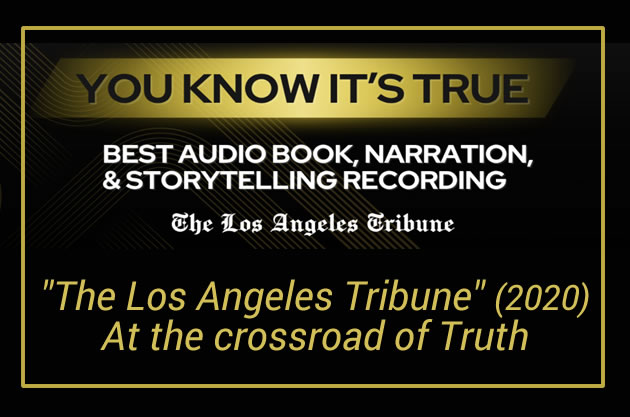
On February 1, 2026, Fab Morvan will walk into the 68th Annual GRAMMY Awards ceremony, not as a fraud, but as a legitimate nominee. His audiobook memoir, You Know It’s True: The Real Story of Milli Vanilli, earned him a nomination in the Best Audio Book, Narration, and Storytelling Recording category alongside Trevor Noah (Into The Uncut Grass), Supreme Court Justice Ketanji Brown Jackson (Lovely One: A Memoir), The Dalai Lama (Meditations), and Carol Connors (Elvis, Rocky & Me).
This time, the work is entirely his. His voice. His story. His truth.
The audiobook’s copyright page tells its own story: ©2025 The Los Angeles Tribune Publishing
(P)2025 The Los Angeles Tribune Publishing
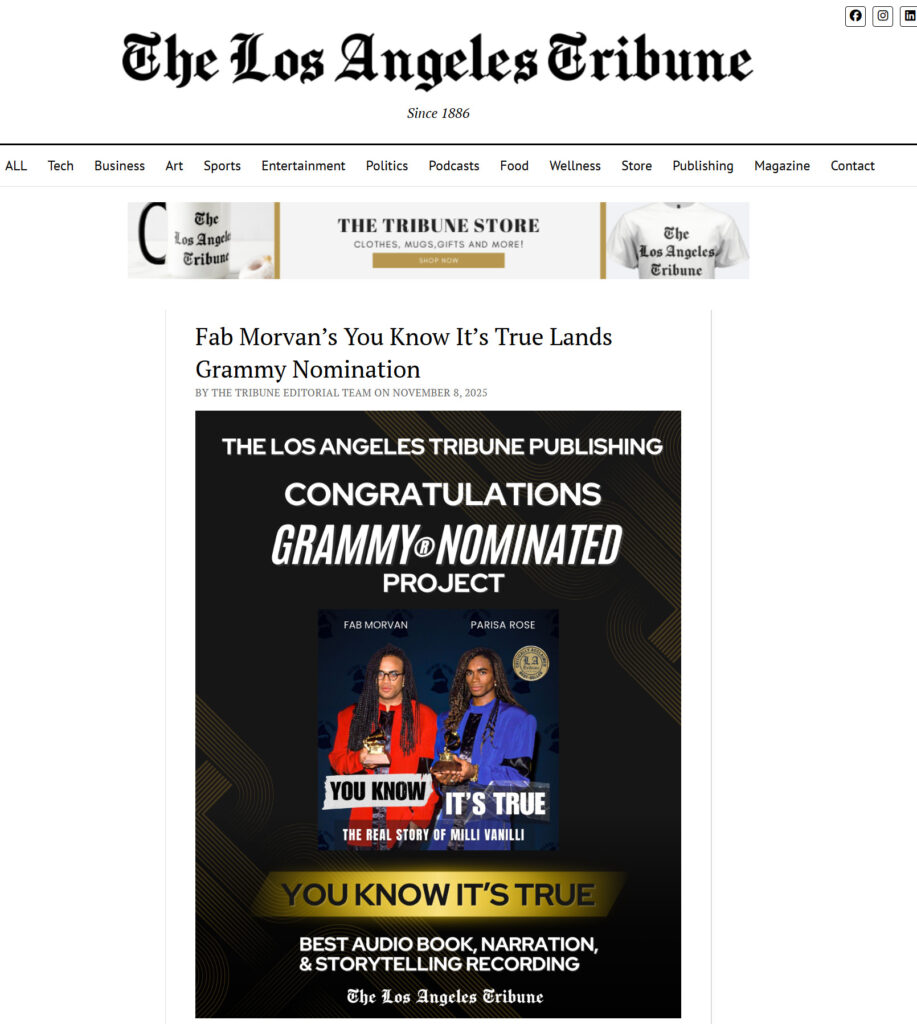
Fab Morvan’s You Know It’s True Lands Grammy Nomination By The Tribune Editorial Team posted on November 8, 2025
And, now, here’s where the parallel gets interesting.
The Plot Twist
The Los Angeles Tribune Publishing isn’t what it appears to be. Yes, there was a Los Angeles Tribune. Actually, several of them. One ran from 1886 to 1890 under Henry H. Boyce. Another from 1911 to 1918 under Edwin T. Earl. A third from 1941 to 1960, published by Almena Lomax. There was even a fictional Los Angeles Tribune in the TV series Lou Grant.
But from 1960 to 2020? Nothing. The name sat dormant for sixty years.
The digital trail tells its own story. The original domain losangelestribune.com (without “The”) was registered back on July 18, 2001, by a different organization. That domain redirects. When Moe Rock (probably not his real name since the trademark is for Mohsen Bakhtiari) revived the Tribune brand in 2020, he couldn’t even claim the obvious web address. Instead, he registered thelosangelestribune.com (with “The”) on April 4, 2020.
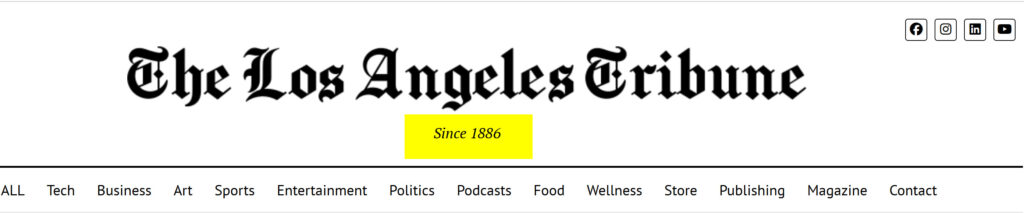
Born in 1990, the same year Milli Vanilli’s Grammy was revoked, Rock positioned his revival as a modern publishing house with a mission of positive journalism and author empowerment. The website proudly declares the Tribune’s heritage, an on the marquee stating “since 1886” as though the decades of silence, and the nineteen years someone else owned the primary domain, never happened.
Here’s the twist: claiming “since 1886” is as false as the singers who were nominated for the 1990 Grammy. Just as Milli Vanilli borrowed voices they didn’t own, the revived Tribune borrows a legacy it didn’t earn. Using the name is perfectly legal. Implying continuity since 1886 is the same kind of deception that destroyed Milli Vanilli’s credibility.
Does continuity matter? Yes.
The Critical Difference
Milli Vanilli failed because they hid the truth. They lip-synced. They posed. They perpetuated the fraud until exposure destroyed them.
The Tribune’s situation could go either way. Legally, reviving a dormant trademark is perfectly legitimate. Strategically, claiming a historic name offers instant brand recognition in a crowded market. The name “Los Angeles Tribune” carries weight that “Moe Rock Media Group” never could.
The question isn’t legality. It’s continuity. Stating “Since 1886” on the marquee implies an unbroken lineage that simply doesn’t exist. There were multiple distinct newspapers under that name, separated by years of silence, followed by six decades of dormancy, followed by a 2020 revival by someone born the year the original Milli Vanilli scandal broke, who couldn’t even secure the original domain name.
If the Tribune clearly positions itself as a revival, a modern steward of a historic name bringing old values into the digital age, the borrowed brand becomes a bridge rather than a deception. Moe Rock himself describes his role as “steward, not owner,” which suggests some awareness of this distinction.
If, however, the Tribune allows audiences to assume an unbroken 138-year lineage, trust becomes as fragile as it was for Milli Vanilli. Journalists and historians will eventually notice. Readers will feel misled. The borrowed credibility will collapse under scrutiny.
The Los Angeles Tribune has given out tributes and their introduction includes “Since 1886.” Photo of Jim Kwik receiving tribute plaque at his event presented by Moe Rock. Link goes to Instagram.

What Fab Morvan Teaches Publishers
Here’s the beautiful irony: The Los Angeles Tribune Publishing is releasing a Grammy-nominated audiobook about the dangers of borrowed credibility while building its own brand on borrowed historical weight.
Fab Morvan’s redemption offers a roadmap. After years in the wilderness, he didn’t try to revive Milli Vanilli. He didn’t claim continuity with something broken. Instead, he claimed his own narrative. He told his truth in his own voice. The Grammy nomination validates that authenticity matters more than shortcuts.
The Tribune could learn from its own author. Celebrate the historic name, absolutely. Henry H. Boyce’s 1886 vision deserves recognition. But distinguish the revival clearly. Own the discontinuity. Tell the truth about resurrection rather than implying survival.
Because borrowed prestige, whether in pop music or publishing, only lasts until someone pulls back the curtain. And in the age of Wikipedia and instant fact-checking, that curtain is thinner than ever.
The Test of February 1st
Whether Fab Morvan wins the Grammy for audiobook or not, he’s already won the larger battle. He transformed from cautionary tale to legitimate artist through the hardest path: doing the actual work, owning his mistakes, and speaking in his authentic voice.
The Los Angeles Tribune faces the same choice. It can continue riding the “since 1886” mystique until questions arise, or it can beat everyone to the punch and tell the more interesting true story: that great names deserve second chances, that heritage can be honored without fakery, and that a 2020 revival with clear eyes and honest positioning has more staying power than a manufactured legacy.
After all, we already know how the other story ends. We watched it play out on MTV thirty-five years ago.
The question now is whether “the publisher” of You Know It’s True knows its own truth well enough to claim it.
Backstory
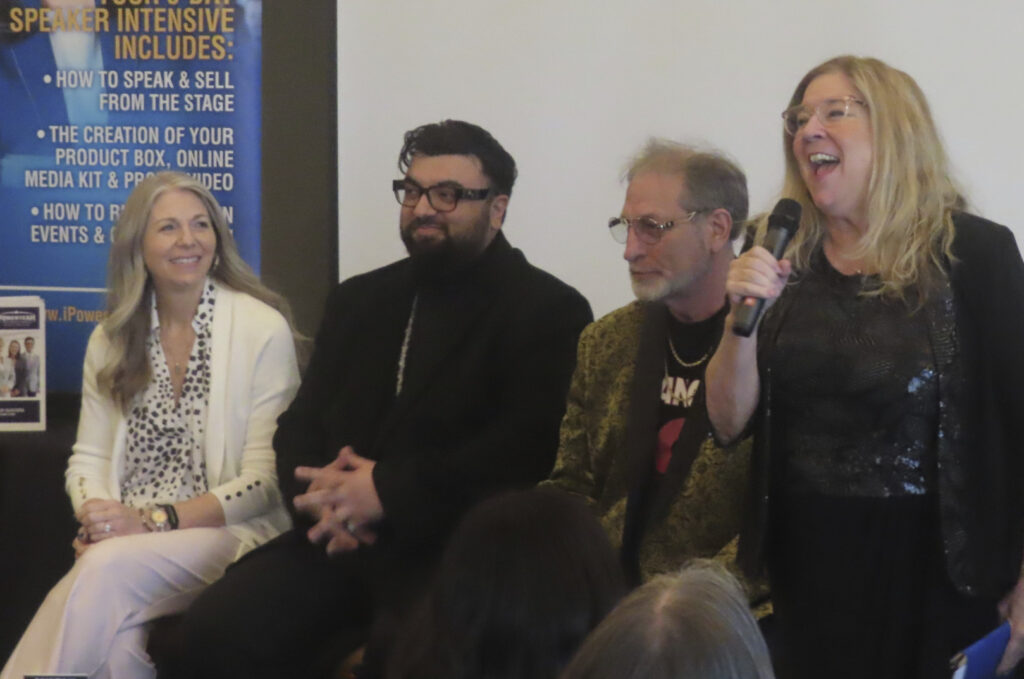
Author Sherrie Rose attended the event where Jim Kwik was awarded his tribute. The next month Moe Rock was on a panel discussion. He mentioned that his publishing house “The Los Angeles Times” was up for a Grammy. That comment prompted this post.
Does continuity matter? “Since 1886”
Yes—continuity matters, but how it matters depends on what is being claimed.
When a publication says “Since 1886,” most reasonable readers interpret that as continuous operation, or at minimum an unbroken editorial lineage. In the case of the Los Angeles Tribune, that continuity does not exist. The historical record shows multiple, unrelated newspapers using the same name across different periods, all of which ceased publication decades ago. The modern use of the name, revived around 2020, is not a continuation, but a re-adoption of a dormant title.
That distinction is critical.
Using “Since 1886” without qualification collapses history, interruption, and revival into a single uninterrupted claim. This is where the problem arises. It is not that the name is illegitimate—names can be reused. It is that the phrasing implies earned longevity rather than inherited symbolism.
And this is where the Milli Vanilli parallel becomes instructive.
In 1990, Milli Vanilli lost their Grammy because they accepted credit for work they did not perform. The issue was not talent, branding, or popularity because it was misattributed authorship. Prestige borrowed without disclosure eventually invites correction.
Thirty-five years later, Fab Morvan’s 2026 Grammy nomination for his memoir narration represents the opposite dynamic. This time, the credit is earned, transparent, and personal. The story is told in his own voice. The past is not denied, but contextualized. Continuity is not fabricated; it is reframed through honesty.
The modern “The Los Angeles Tribune” sits at the same crossroads.
This blog, LikeUp.com has been around longer than The Los Angeles Tribune. Both run on WordPress.
The fictitious “Los Angeles Tribune” (founded 1938) on the Lou Grant TV show staring Ed Asner probably also borrowed the idea for the name from the defunct publication.
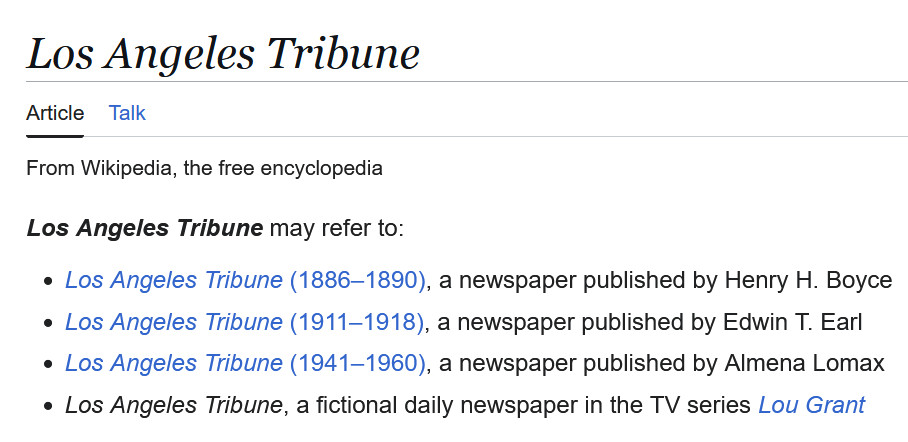
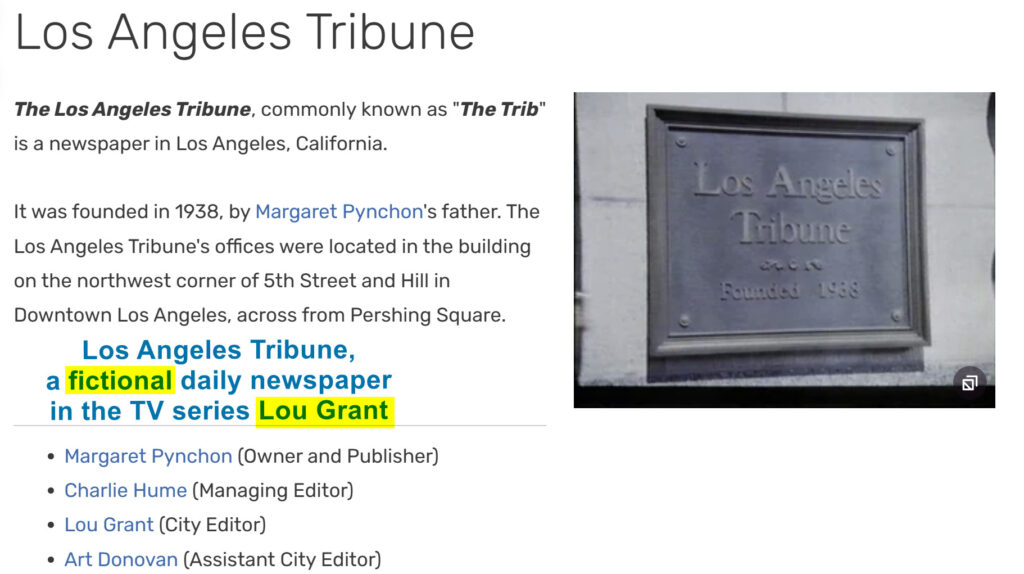
Note: Research, writing and sources using AI tools have been edited.
Sources
- https://thelosangelestribune.com
- https://thelosangelestribune.com/contact
- https://thelosangelestribune.com/tribune-publishing-house
- https://www.facebook.com/losangelestribune
- https://en.wikipedia.org/wiki/Los_Angeles_Tribune
- http://beta.newyorktribune.com/LosAngelesTribunecom
- https://wikigenius.fandom.com/wiki/Moe_Rock
- https://www.grammy.com
- https://lougrant.fandom.com/wiki/Los_Angeles_Tribune
- https://moerock.com/ disambiguation – not associated.
- https://www.facebook.com/moe.rock.92 disambiguation – not associated.
see also YouTube, click, tap image below
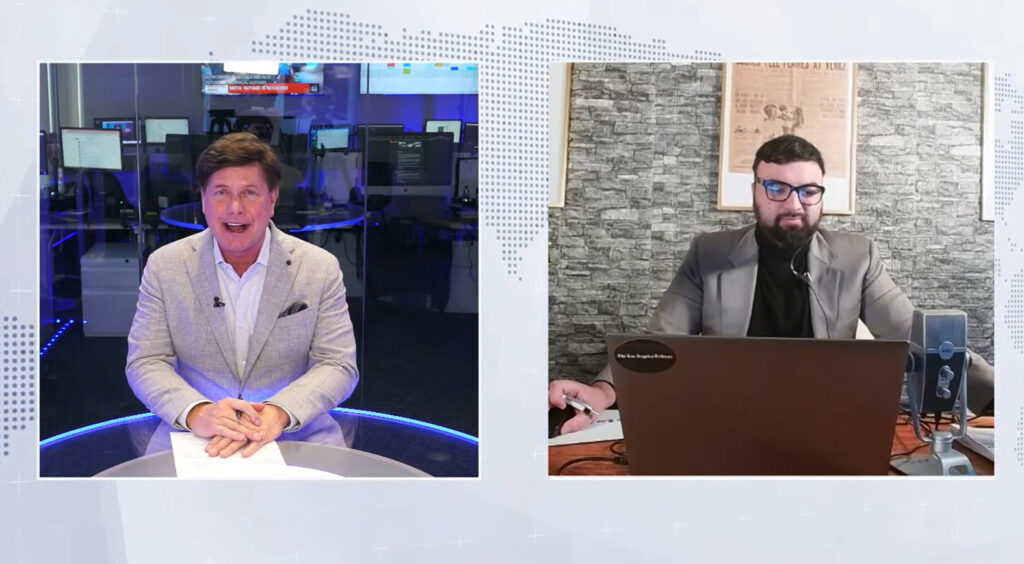
Moe Rock, Publisher of The Los Angeles Tribune | The Jeff Crilley show
-
USA Today page contains press release content distributed by XPR Media. Members of the editorial and news staff of the USA TODAY Network were not involved in the creation of this content.
The placement of this content is part of a PAID service.January 23, 2026 – PRESSADVANTAGE
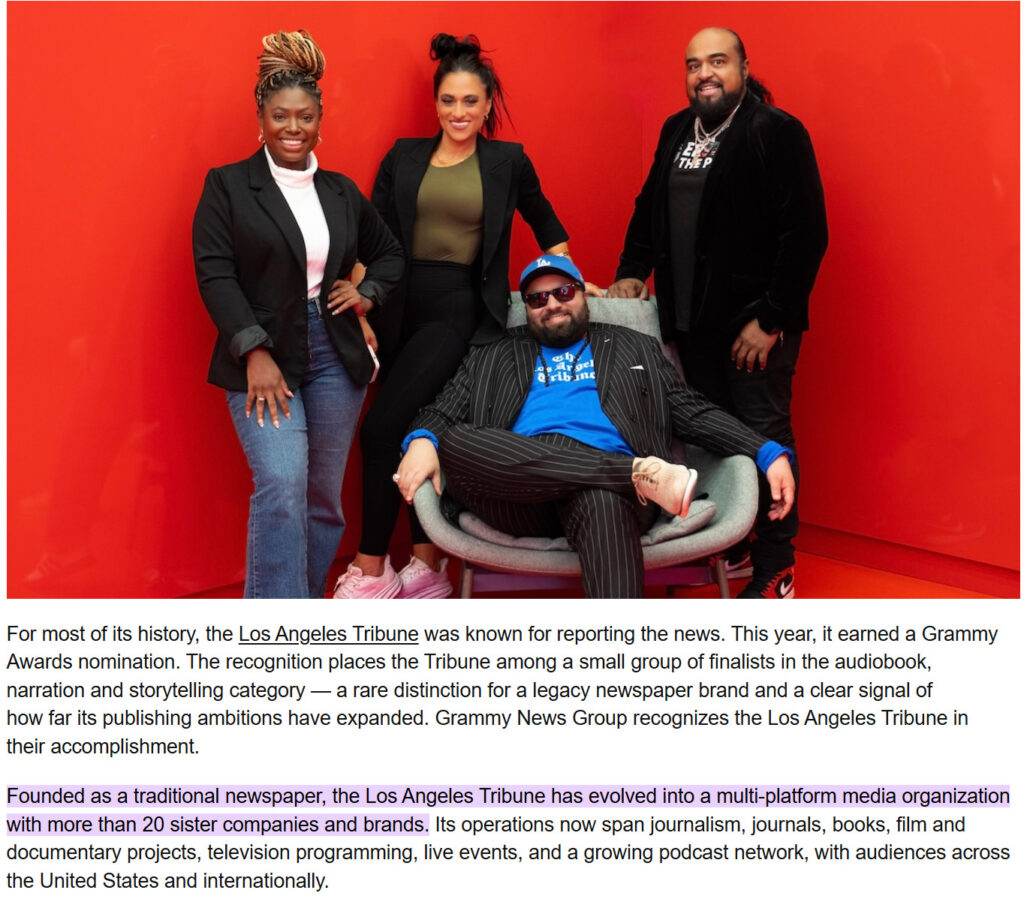
The Grammy-nominated audiobook You Know It’s True: The Real Story of Milli Vanilli, published and produced by the Tribune, was led by its executive and publishing leadership, including CEO Moe Rock, COO and co-author Parisa Rose, Chief Strategy Officer Alisha Magnus-Louis, Vice President of Special Projects Giloh Morgan, and Fab Morvan. Narrated and produced by Morvan, the project tells the Milli Vanilli story through the voice of the group’s remaining living member, grounding the narrative in firsthand experience rather than outside interpretation. https://www.usatoday.com/press-release/story/23991/
ADDENDUM 1:
The press release notes 20 sister companies and brands. - The press release prompted additional investigation on these sister brands of The Los Angeles Tribune.
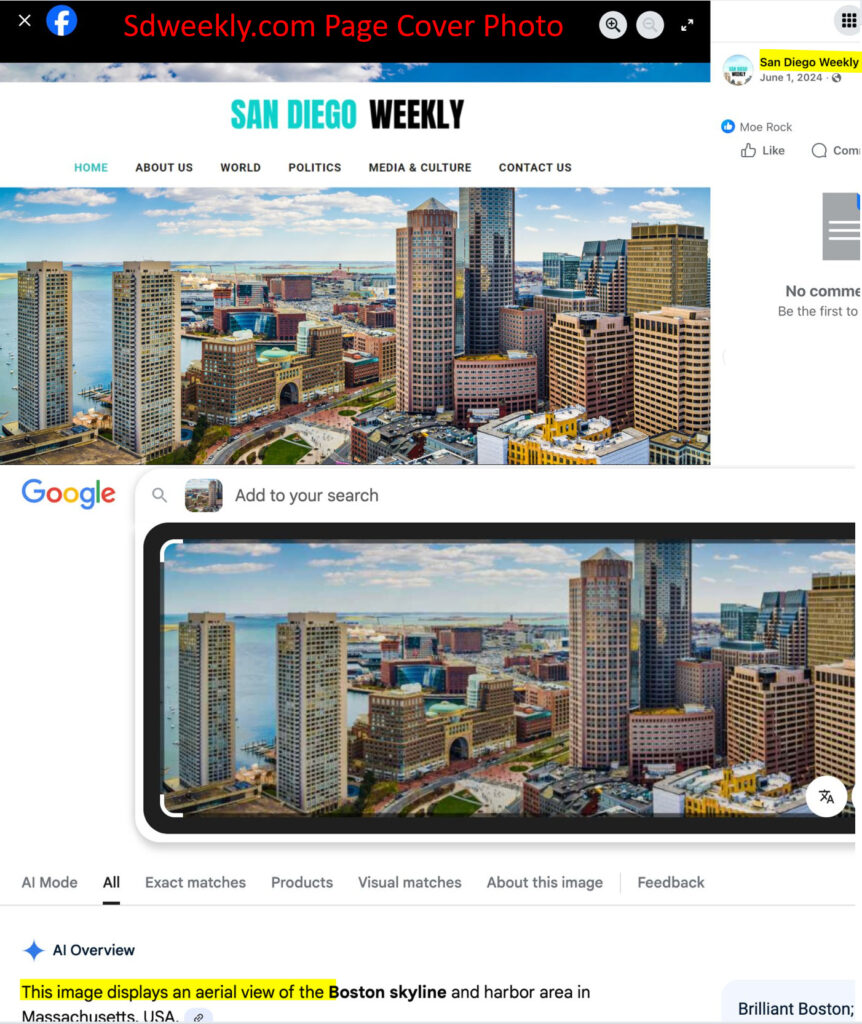
- Review of the SDWeekly.com (probably meant to mirror the LAWeekly.com but zero relation) shows registered as a domain in 2024.
- Most of the stories post on the site and Facebook page have nothing to do with the city or country of San Diego.
- The Facebook page for SDWeekly.com shows the cover photo of the city of Boston. The page was “liked” by Moe Rock.
ADDENDUM 2:
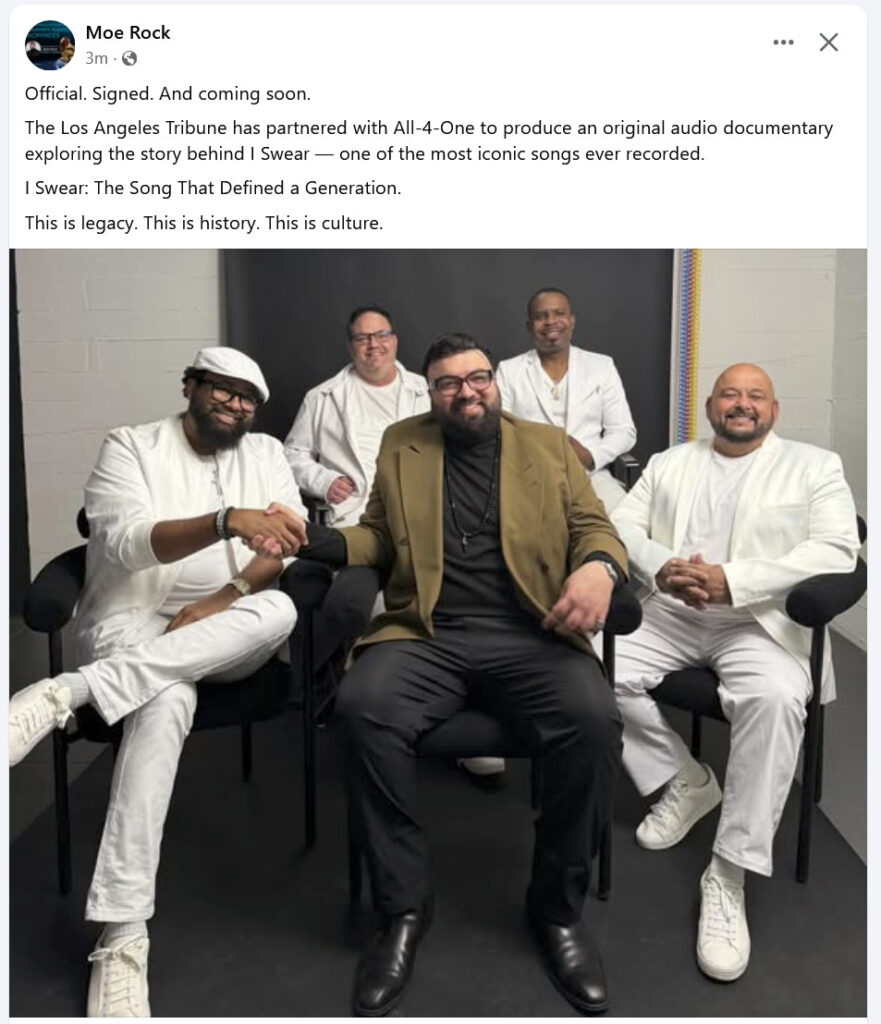
Moe Rock and The Los Angeles Tribune has partnered with All-4-One to produce an original audio documentary exploring the story behind I Swear, one of the most iconic songs ever recorded.
Facebook public post January 25, 2026
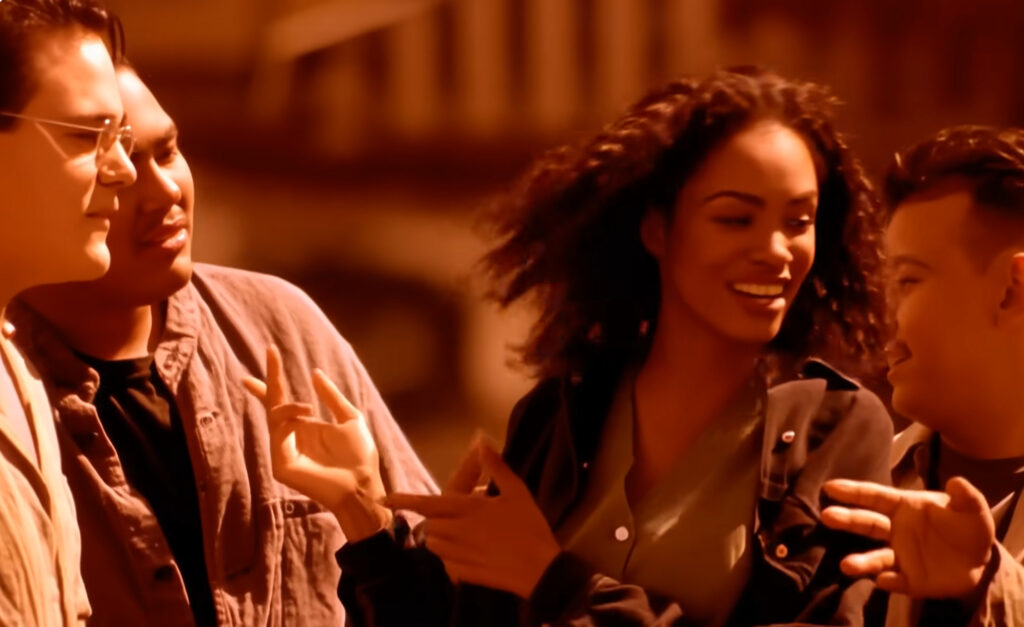
All-4-One – I Swear (Official Music Video) RHINO YouTube Channel
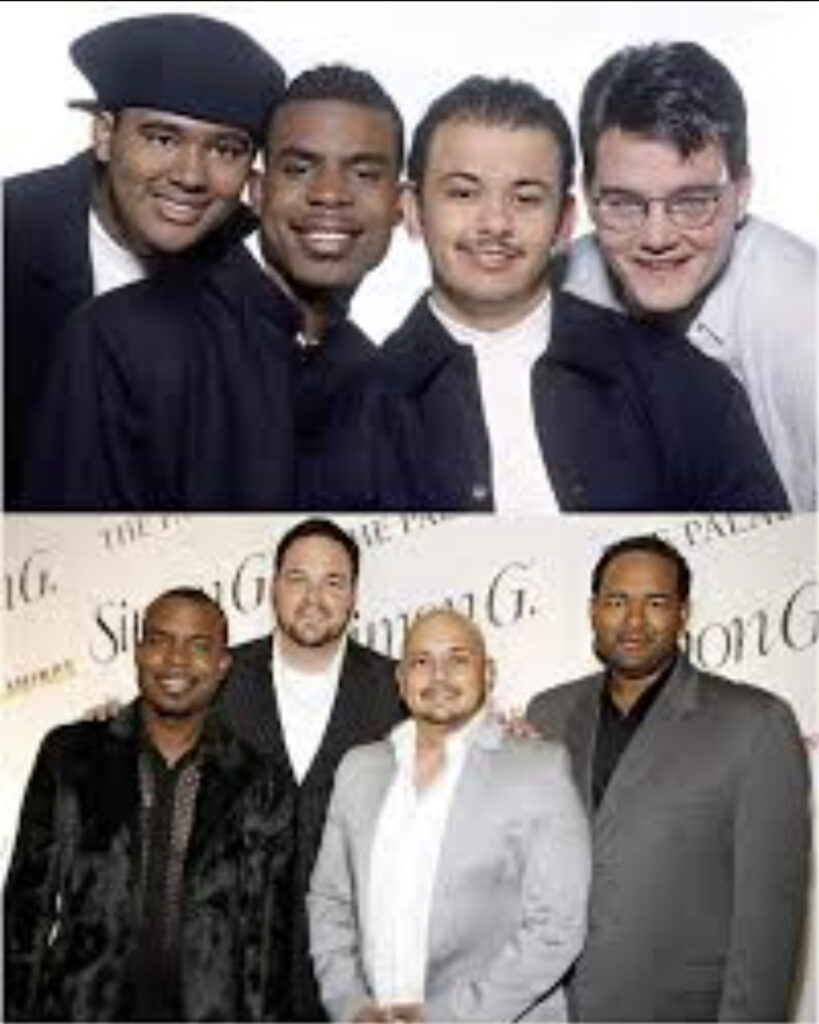
All-4-One Singers Then and Now
ADDENDUM 3:
The press release notes 20 sister companies and brands.
One is The Vegas Herald which is in Live/Pending trademark status
represented by attorney Joseph Michael Teleoglou JT IP Law PC.
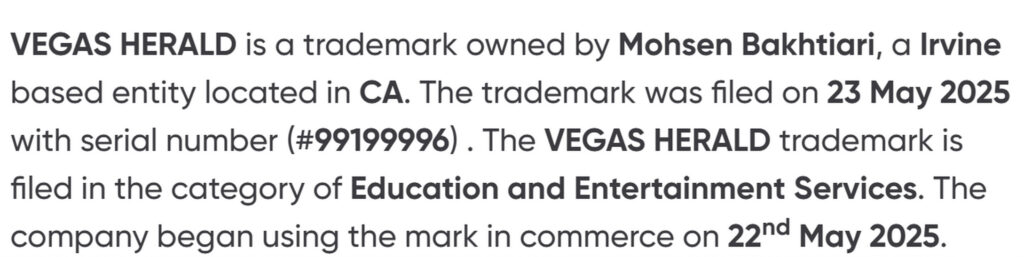
Other registered and pending trademarks:
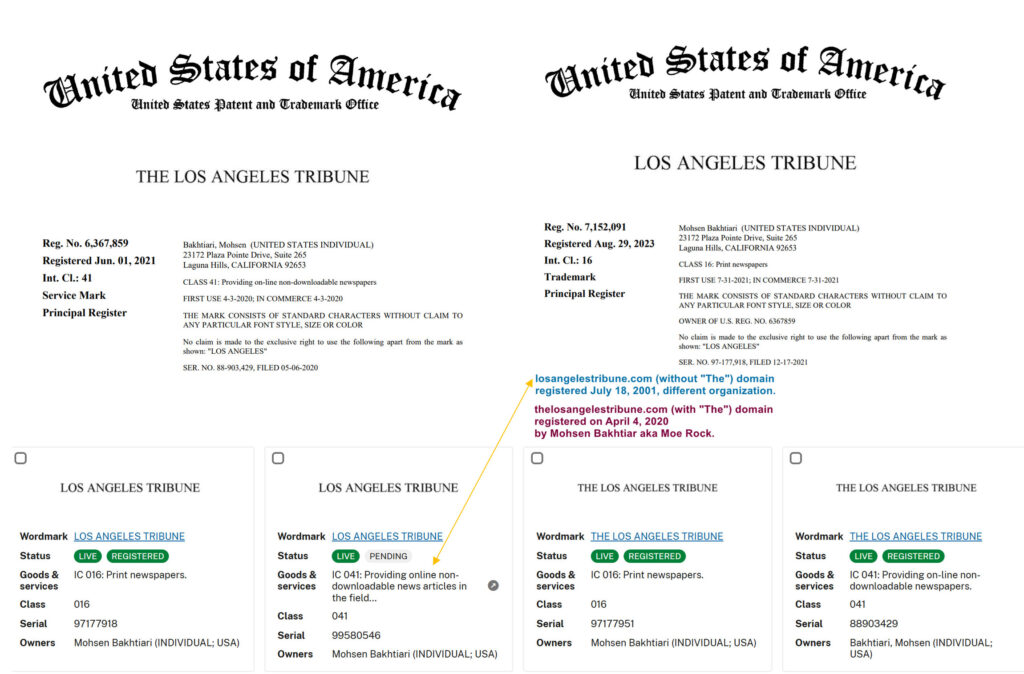
- 016 – Primary Class
- (Paper goods and printed matter) Paper, cardboard and goods made from these materials, not included in other classes; printed matter; bookbinding material; photographs; stationery; adhesives for stationery or household purposes; artists’ materials; paint brushes; typewriters and office requisites (except furniture); instructional and teaching material (except apparatus); plastic materials for packaging (not included in other classes); playing cards; printers’ type; printing blocks. Has there every been a “printed” newspaper for The Los Angeles Tribune starting 2020?