Fundamental #5: Feel God’s Grace
Fundamental #5: Feel God’s Grace
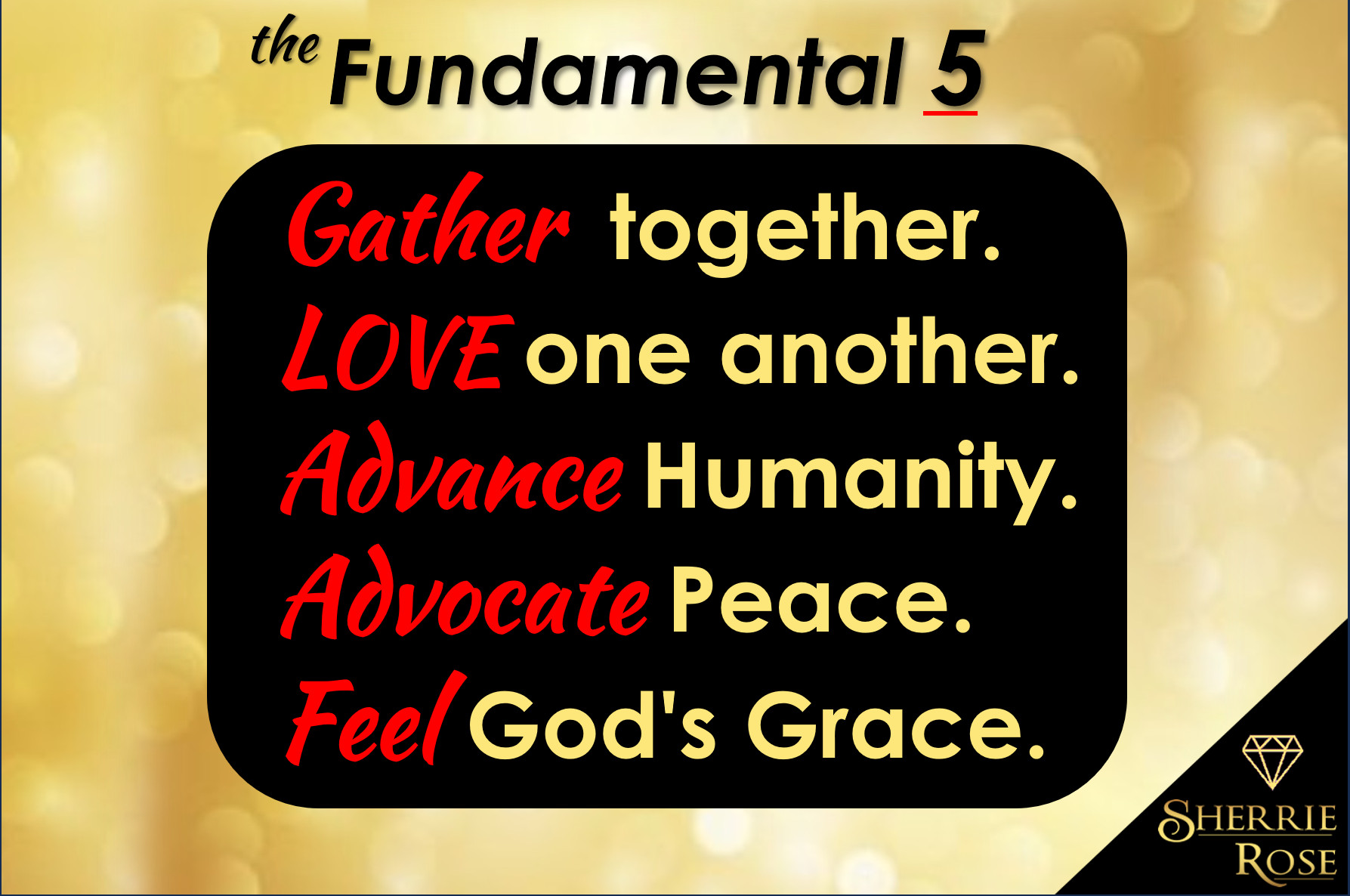
Fundamental 5 of the fundamental 5 for humanity is Feel God’s Grace
Feel God’s Grace: Reclaiming the Sacred Beyond Conventional Religion
The language of the sacred is being questioned. Across generations, people are asking whether they can hold onto something sacred without accepting the authority structures, gender hierarchies, and exclusionary frameworks that have historically come with it. Whether grace, mystery, and transcendence can exist outside the scaffolding of organized religion that has held them for so long.
For many, inherited religious traditions continue to serve well. They provide community, ritual, moral guidance, and a sense of connection to something larger. When religion helps people become more compassionate, more just, more capable of genuine love, it is fulfilling its highest purpose.
Yet for others, the cost of staying within inherited frameworks has become too high. Perhaps their experiences have been confined by fear, conditional belonging, or the flattening of human expression into binaries of saved and damned, worthy and unworthy, chosen and other. It creates space for those who need to forge a different path while honoring the reality that many find depth and authenticity within traditional practice.
Grace as Presence, Not Transaction
To feel God’s grace as something intimate rather than distant requires dismantling the idea that divinity is transactional. That it must be appeased, earned, or accessed through the right words, rituals, or intermediaries. This reframing suggests that the sacred is woven into existence itself; alive within the fabric of connection, creativity, and becoming.
Grace here becomes the ground from which life unfolds. It shows up in the persistence of kindness in a cruel world, in the way grief cracks people open and somehow, inexplicably, also makes them more capable of love. It lives in the stubborn refusal of life to be entirely reducible to mechanics, in the fact that beauty matters even when it serves no survival function, in the way meaning insists on asserting itself even when we try to flatten existence into pure rationality.
Grace, understood this way, is available, present, unearned. It does not divide humanity into the deserving and undeserving or elevate one gender as inherently closer to the divine.
Spirituality Without Hierarchy
The critique of religious power structures is central to this reframing. Religions have long served dual functions: as vessels for genuine spiritual inquiry and as mechanisms of social control. The latter often dressed in the language of the former. When divine will is claimed as justification for patriarchy, when sacred texts are selectively deployed to enforce gender roles or exclude entire groups of people, when power flows through the assertion that some individuals are more qualified to interpret the divine than others—spirituality becomes something else entirely.
Part of the hierarchy is the human need to look toward something recognizable. In the 10 Commandment, the first one is: I am the Lord thy God. You shall not have no other gods before Me… and it continues, “You shall not make for yourself an image in the form of anything in heaven above or on the earth beneath or in the waters below. You shall not bow down to them or worship them.” This also means not to worship people… even people that humans have made into a deity because their comprehension is so limited that they project “God” onto humans that talk about God. If the deity has a name, such as Jesus, Muhammad, Krishna, Rama, Shiva, Laozi (Lao-Tzu), Confucius, Zoroaster, Akhenaten, and is worshiped as divine, they are breaking the first commandment and putting a hierarchy in place. A spirituality grounded in mutual belonging does not need to elevate some voices while silencing others or enshrine inequality as divine order.
Community requires some organization, ritual benefits from consistency, and wisdom often comes from those with more experience. The difference lies in whether structure serves the flourishing of all or exists to concentrate power. Whether ritual creates sacred space or polices who gets to enter it. Whether spiritual wisdom is offered as gift or hoarded as currency.
The Pressure of Religious Inheritance
For many, religious tradition is not neutral. It arrives already laden with memory. Sunday mornings that felt like performance. Questions met with deflection or discipline. Bodies monitored, desires pathologized, curiosity treated as disobedience. The message that divinity operates through hierarchy, that some people are closer to God than others by virtue of their gender, that love is something earned through adherence and revoked through deviation.
These experiences leave marks. They shape how people understand power, belonging, and their own worth. The language of sin, fall, and redemption can become the architecture of shame, a framework through which every impulse, every doubt, every deviation from prescribed norms is evidence of fundamental brokenness. The sacred gets fused with surveillance, grace with control.
What happens when inherited frameworks no longer fit? For some, the answer is to leave entirely, to close the door on anything that resembles spirituality because the cost of staying has been too high. For others, the path forward involves reformation from within, working to reclaim what is life-giving while challenging what is harmful. And for still others, it means asking a different question: What if the sacred was always larger than the structures built around it? What if I can honor what was good in my inheritance while releasing what has caused harm?
Love Without Conditions
Perhaps nothing has done more harm than the theological sleight of hand that turns love into something conditional while insisting it is unconditional. The assertion that God loves unconditionally gets immediately followed by the enumeration of all the ways one can fall outside that love. Grace arrives with the threat of eternal punishment for those who believe, desire, or exist incorrectly.
This creates a profound distortion. People learn that love must be earned through perfect performance. That their worth is contingent, revocable, always subject to audit. They internalize surveillance, becoming their own most relentless judges. And when they inevitably fail to meet impossible standards, they either double down on self-condemnation or collapse into despair.
Love, at its most fundamental, could be the organizing principle of reality itself—the force that pulls matter into relationship, that drives the universe toward complexity and consciousness, that shows up as fierce protection of the vulnerable and outrage at injustice. A love that celebrates the wild diversity of human experience as evidence of creativity.
This love still requires boundaries. Recognizing that every person has inherent worth means starting from that premise, then working through the complexities of harm and healing. Harm exists because we are finite beings with incomplete information, operating in systems that often pit our needs against one another’s.
Humanity’s Continuous Journey
The doctrine of the fall: the idea that humanity began in perfection and has been in decline ever since, has shaped Western consciousness in ways we barely recognize. It positions history as loss, casts curiosity as the original sin, and frames suffering as punishment.
A different story becomes possible. Humanity’s journey could be about becoming something that has never existed before. We might be rising, still forming, beautifully and maddeningly incomplete.
This perspective does not minimize suffering or pretend that everything happens for a reason. It does not spiritually bypass the very real cruelties and injustices that mark human history. Yet it refuses to locate the source of that suffering in some primordial mistake that stained all of existence. Instead, it sees growth, learning, failure, repair—an ongoing negotiation with what it means to be conscious beings capable of both extraordinary cruelty and breathtaking compassion.
We are participants in an unfolding story, one where our choices matter, where the future is genuinely open, where responsibility cannot be deferred to divine will or cosmic plan. The weight of that is both terrifying and liberating. If no external force has already decided how things will turn out, then what we do actually matters. The world we create together is on us.
Truth Beyond Single Authority
One of the most difficult inheritances from religious fundamentalism is the conviction that truth must be singular, complete, and unchanging. That it can be fully captured in one text, one tradition, one set of propositions. This certainty offers comfort—the world becomes simpler when there is a final authority to settle every question. The cost arrives in what must be suppressed.
It requires shutting down doubt, flattening paradox, and rejecting anything that does not fit the predetermined framework. It creates an us-versus-them dynamic where those who question or interpret differently become threats. And it substitutes the hard work of discernment with the simple work of obedience.
When that certainty loosens, something like epistemological humility emerges. The recognition that reality is bigger than any single perspective can capture. That wisdom comes from multiple sources: lived experience, reason, intuition, empirical investigation, artistic insight, the accumulated knowledge of communities over time. That truth is something we approach collectively, through dialogue and disagreement and the patient work of integration.
This means recognizing that the pursuit is ongoing, that our current understanding is always provisional, and that the people with whom we disagree most vehemently might be seeing something we have missed. It means staying curious, staying open, and staying humble about the limits of what any of us can know for certain.
Healing Through Justice, Not Sacrifice
The theology of sacrifice, the idea that violence against an innocent can somehow make things right, has normalized suffering in ways that extend far beyond religious practice. It teaches that pain is redemptive, that brokenness must be appeased through more brokenness, that the way to address wrongdoing is through the infliction of punishment on a stand-in victim.
This logic seeps into how we think about justice, forgiveness, and repair. It makes retribution seem righteous and rehabilitation secondary. It allows us to avoid the messy work of actually addressing root causes because we have a scapegoat mechanism that promises resolution through violence.
Healing requires something harder and more honest: facing what was done, understanding why it happened, making amends where possible, and changing the conditions that allowed harm in the first place. Forgiveness becomes about refusing to let past harm dictate the future. Grace becomes the commitment to repair.
Justice becomes about restoration. Accountability becomes about growth. And healing becomes possible through the hard, slow work of truth-telling and change.
Mystery Over Control
The impulse to reduce God to something manageable is understandable. Humans are pattern-seeking creatures who thrive on predictability. A God who can be understood, whose rules are clear, whose favor can be secured through the right actions—that is a God who makes the universe feel less terrifying.
Yet in grasping for certainty, something gets lost. The sacred becomes domesticated, stripped of its strangeness and power. Mystery gets traded for explanation, awe for mastery. And the divine becomes a system to be navigated.
God—or whatever name we give to the source, the ground, the ultimate reality—might be less like a person with opinions and more like the depths we cannot fathom. Too present, too intimate, too vast to be reduced to propositions and rules. Mystery in this sense acknowledges that some questions do not have answers we can articulate, that meaning sometimes exceeds language, that we are held by something larger than we can comprehend.
This mystery does not require the surrender of reason or the embrace of irrationality. It recognizes that reason has limits, that lived experience sometimes reveals truths that cannot be captured in syllogisms. It is the willingness to sit with unknowing, to let go of the need to have everything figured out, and to trust that presence is possible even in the absence of answers.
Belonging and Worthiness
The division of humanity into categories of worthy and unworthy has been one of religion’s most destructive contributions. It creates hierarchies that justify exclusion, violence, and indifference. It allows people to sleep peacefully while others suffer because those others are deemed less deserving of care, protection, or dignity.
Belonging could instead be the starting point. Every person is already part of the fabric of existence, already woven into the network of relationships that constitute reality. The question becomes whether we will honor the belonging that already exists.
This has implications for how communities form and function. The work becomes creating spaces where everyone can actually show up as themselves, where difference is gift, where conflict can be navigated without resorting to exile. It means giving up the fantasy of homogeneity and doing the harder work of building genuine pluralism.
It also shifts how we think about the sacred. Serving those deemed least worthy becomes recognition of what already is. How we treat the most marginalized reveals how we treat the divine itself.
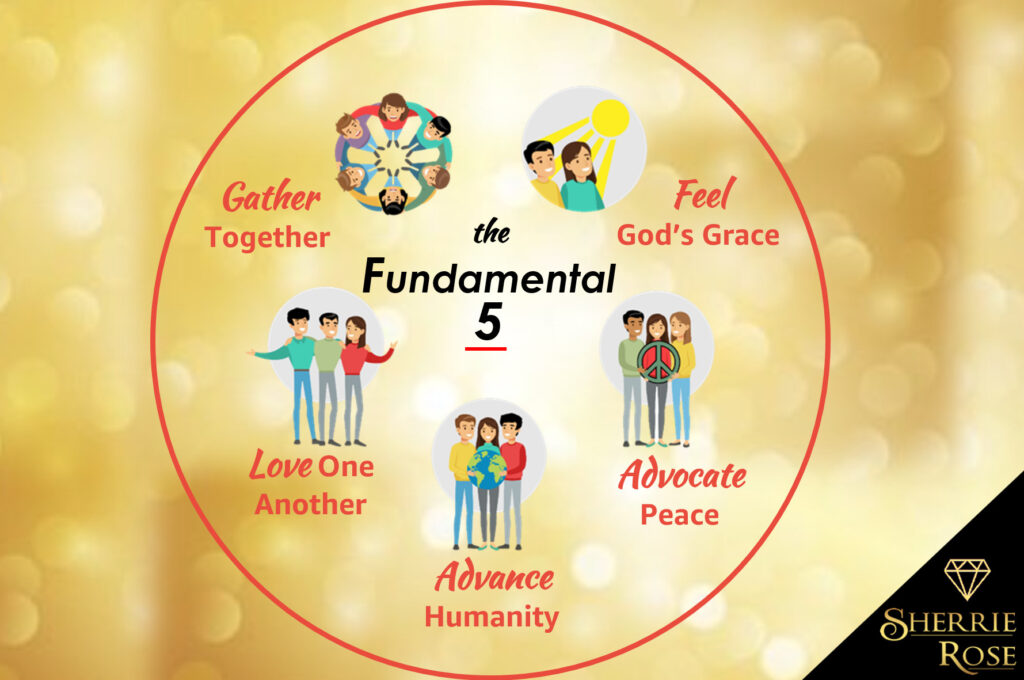
What Can YOU Do to Feel God’s Grace?
Spirituality without inherited religious frameworks requires active cultivation, deliberate practice, and ongoing discernment. The absence of prescribed rituals and doctrinal certainty means the responsibility to forge one’s own path.
Develop Your Own Spiritual Practice
Create space for silence. In a culture saturated with noise, the practice of stillness is radical. This can be five minutes in the morning before looking at your phone, a walk without earbuds, sitting with coffee and watching light change. The point is to create gaps in the constant input, moments of simple presence.
Engage with beauty deliberately. Grace shows up in art, music, nature—in anything that stops you mid-breath and reminds you that existence is more than utility. Visit museums, even if you don’t understand what you’re looking at. Listen to music that moves you, whether that’s classical or jazz or something your teenager introduced you to. Stand in front of landscapes that make you feel small. Let yourself be affected without needing to explain or justify the experience.
Write to clarify. Journaling is about externalizing what is inside so you can see it more clearly. Write about what confuses you, what you are grieving, what you hope for. Write about moments when you felt connected to something larger, or times when meaning seemed to collapse entirely. The practice itself is the point.
Question Without Shame
Name what does not sit right. If certain religious teachings or spiritual claims make you uncomfortable, investigate that discomfort rather than suppressing it. Does the idea that God is primarily concerned with sexual purity while seemingly indifferent to economic injustice make sense? Does the notion that women are equal but subordinate hold together logically? Does the claim that questioning is dangerous suggest confidence or fragility?
Read outside your inherited tradition. Explore philosophies and spiritual frameworks from other cultures and time periods. Not to appropriate or adopt wholesale, but to see what resonates and what illuminates gaps in what you were taught. Buddhist concepts of non-attachment, indigenous understandings of reciprocity with nature, Stoic ideas about what is within your control—these are not threats to spiritual integrity but resources for deeper understanding.
Trust your experience. If your lived reality contradicts what you were taught, believe your experience. The authority of direct knowledge—what you have felt, witnessed, survived—is not less valid than inherited doctrine. When someone tells you that your pain is God’s will or that your questions are evidence of insufficient faith, you are allowed to reject that interpretation. Your experience of the sacred, or its absence, matters.
Cultivate Connection Over Belief
Prioritize how you treat people. Theology matters, yet how you show up for your neighbor, whether you advocate for justice, whether you practice repair when you cause harm—these reveal the depth of your spiritual practice. If spiritual practice does not make you more capable of love, more attentive to suffering, more committed to equity, then it is failing at its core purpose.
Build community around shared values. Belonging does not require uniformity of interpretation. Find people who are also trying to live with integrity, who value honesty and growth, who are committed to showing up for one another. These relationships can hold space for spiritual seeking without demanding consensus on ultimate questions.
Practice forgiveness as release. Forgiveness means refusing to let past injury control your present. This work is for your own liberation. You can forgive someone and still maintain boundaries. You can forgive and still demand justice.
Engage Mystery Without Needing Answers
Sit with the fact that you do not know. Practice saying “I don’t know” without rushing to fill the silence with speculation. When confronted with suffering that seems meaningless, with inequity that seems systemic, with evil that seems inexplicable, resist the urge to explain it away with theodicy or divine plan. Sitting with not-knowing is uncomfortable yet more honest than false certainty.
Pay attention to moments of transcendence. Notice when you feel connected to something larger—whether that is in ritual, in nature, in art, in service to others, or in the midst of ordinary moments. Do not dismiss these experiences as neurochemistry or wishful thinking. Also do not inflate them into proof of particular metaphysical claims. Simply notice, remember, and let them inform how you move through the world.
Hold paradox without resolving it. The sacred often shows up in tension. Justice and mercy, individual autonomy and communal responsibility, acceptance and transformation—these are realities to be held simultaneously. Practice sitting with both sides of a paradox, resisting the pressure to collapse into one or the other.
Reclaim Language Carefully
Use spiritual vocabulary when it serves, discard it when it harms. Words like grace, redemption, and salvation carry weight. If they open something in you, use them. If they trigger shame or fear or the memory of being told you were broken, find other language. You do not owe loyalty to terminology. The content matters more than the container.
Name the sacred in ways that honor your experience. Some people find the language of God or the divine meaningful. Others connect more with source, mystery, ground of being, or simply the awareness that reality exceeds material explanation. Use language that helps rather than hinders your connection to something larger.
Reject language that dehumanizes. If spiritual teaching requires you to think of yourself as wretched, worthless apart from divine intervention, or fundamentally corrupt, that language is harming you. Grace does not require self-hatred as its premise. Humility is recognizing your limits and your participation in systems larger than yourself.
Act on Behalf of others
Use your voice and platform. If you have benefited from proximity to religious power or from being part of dominant groups, leverage that position on behalf of those who have been excluded or harmed. Call out misuse of spiritual authority, challenge teachings that perpetuate inequality, and create space for voices that have been silenced.
Practice reparation where possible. If you have participated in religious communities that caused harm, through exclusion, through enforcement of gender norms, through support of unjust systems, find ways to make amends. This might mean financial contribution to organizations doing repair work, public acknowledgment of harm done, or simply being the person who makes sure it does not happen again on your watch.
Protect Your Spiritual Health
Set boundaries around religious manipulation. If people use fear of hell, threats of divine punishment, or warnings about Satan to control your behavior, that is manipulation even if it is dressed in spiritual language. You do not have to tolerate being told that questioning is evidence of demonic influence or that autonomy is rebellion. Walk away from spaces that require your diminishment as the price of belonging.
Recognize spiritual abuse. Religious trauma is real and its effects can be as profound as other forms of trauma. If you find yourself unable to make decisions without crippling guilt, if you struggle with worthiness, if religious language triggers panic or shame, consider working with a therapist who understands religious trauma. Healing is possible.
Give yourself permission to change. The spiritual path is dynamic. What you believe at thirty will likely differ from what you believe at sixty. Growing, learning, and revising understanding is intellectual and spiritual integrity in action. You are allowed to change your mind.
Remember the Long Arc
Spirituality without certainty can still have depth. The absence of prescribed answers often means deeper engagement because you cannot outsource the work of discernment. Trust that the questions matter even when answers remain elusive.
You do not have to do this alone. Even outside traditional religious structures, spiritual community is possible. There are many “new age” churches and organizations. Find fellow travelers, people who are also trying to construct lives of meaning without inherited scaffolding. Share resources, compare notes, hold space for one another’s doubts and discoveries.
Your seeking is valid. You do not need permission from religious authorities to explore what the sacred means to you. You do not need to earn the right to feel grace or experience transcendence. These are part of being human, available to anyone willing to pay attention. The path is yours to forge, and that is both responsibility and gift.
To feel God’s grace is to be one with the divine. For some, that happens beautifully within inherited religious frameworks. A tradition that helps you become more compassionate, more just, more capable of love. If your religious community deepens your connection to the sacred and to other people, if it challenges you to grow and holds you accountable without diminishing you, then you have found something valuable worth honoring.
For others, spiritual integrity requires stepping outside those frameworks. Maybe because the particular tradition inherited may have caused harm, or simply may not fit the shape of your actual spiritual experience. This affirmation honors what came before while asserting that you have the right and responsibility to discern what is true, what is life-giving, and what is worth carrying forward. It is hard work. It lacks the comfort of certainty and the ease of prescribed ritual. Yet it offers something precious: an honest relationship with the sacred, one built on your actual experience.
Whether within tradition or outside it, grace grows stronger through direct encounter. Mystery deepens through humble engagement. And the divine, however understood, exceeds every structure that has claimed to contain it. You are allowed to feel it in your own way, on your own terms, and trust that what you find is real.

References
See also https://likesup.com/fundamental-1-gather-together/
and https://likesup.com/the-fundamental-5-for-humanity-glaaf/