
The Pillar of Permanence
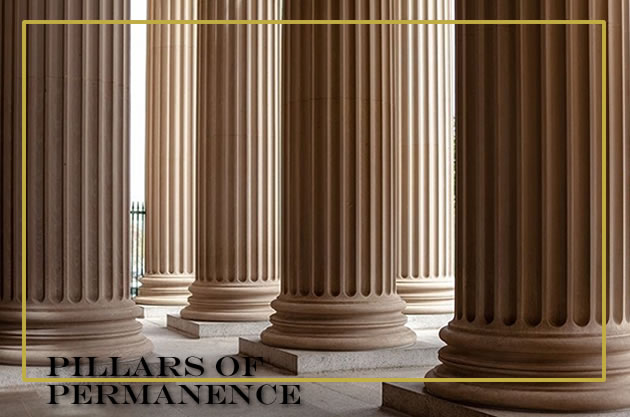
The Pillar of Permanence
Pillars. There’s something profound about making things that last. Certain insights deserve to outlive the moment of their discovery. Masterwork is an act of generosity across time.
When we develop something permanent, we’re saying: “This understanding took effort to reach. Let me make it easier for whoever comes next.”
Think of the medieval cathedral builders who knew they’d never see completion. Or the scientists who meticulously document their methods. Or the open-source developer who writes clear comments in code they’ll never touch again.
Permanence creates conversation across generations. A well-articulated explanation, a thoughtfully designed system, a clearly stated principle—these become touchstones that others can build upon, argue with, or adapt. The permanence lives in how it enables continuous learning.
What makes something worth making permanent? Three things:
- Well-earned clarity – When you’ve wrestled with a complex problem and finally found a way to think about it that makes everything click, capturing that clarity helps others skip the confusion you endured.
- Patterns that repeat – Some problems crop up again across contexts. Document the solution once, permanently, and you’ve created a resource for countless future encounters with that pattern.
- Foundations – Certain masterworks serve as infrastructure. Not flashy, but essential. The permanent capture of these fundamentals lets others stand on solid ground instead of rediscovering bedrock.
Not everything deserves permanence. Not everything is legacy worthy.
The distinction matters. Legacy worthy work earns its permanence through usefulness that is beyond you, because of you. It’s the difference between broadcasting and building, between content and contribution.
The internet promised permanence but delivered ephemerality. Social media taught us to optimize for the moment, for virality, for the dopamine hit of engagement. Wisdom doesn’t go viral. It accumulates slowly, compounds quietly, and requires intention to preserve.
Developing permanent masterwork is an act of faith—faith that understanding carries weight beyond attention, that depth outlasts novelty, that someone, somewhere, sometime will benefit from what you’ve learned. You might never know who. You don’t need to.
The pillar of permanence is about building stepping stones for others. It’s choosing to make the path clearer, the climb easier, the view more accessible for whoever follows.