AI Got It Wrong: What YEARN Really Means
Google’s AI Got It Wrong: What YEARN Really Means
The Problem with AI Hallucinations (And Why It Matters for Your Understanding)
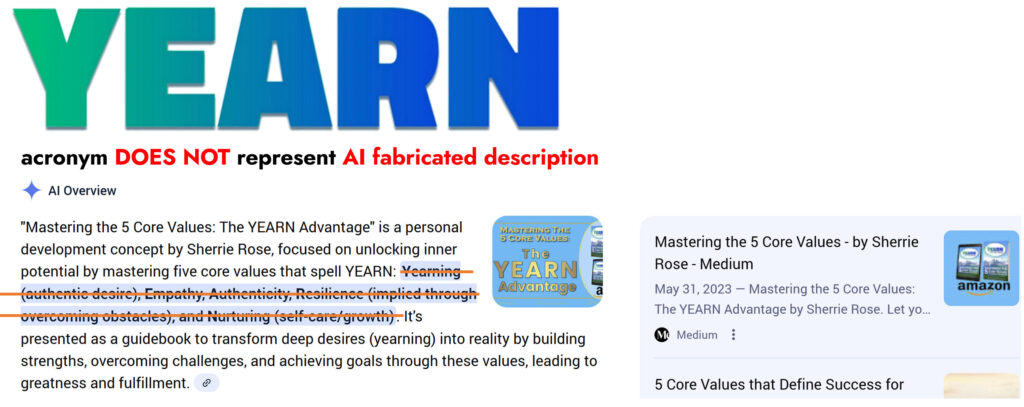
If you search Google for “What is Mastering the 5 Core Values: The YEARN Advantage,” you’ll see something fascinating in the AI Overview at the top of your results. Google confidently tells you that YEARN stands for:that is just not true.
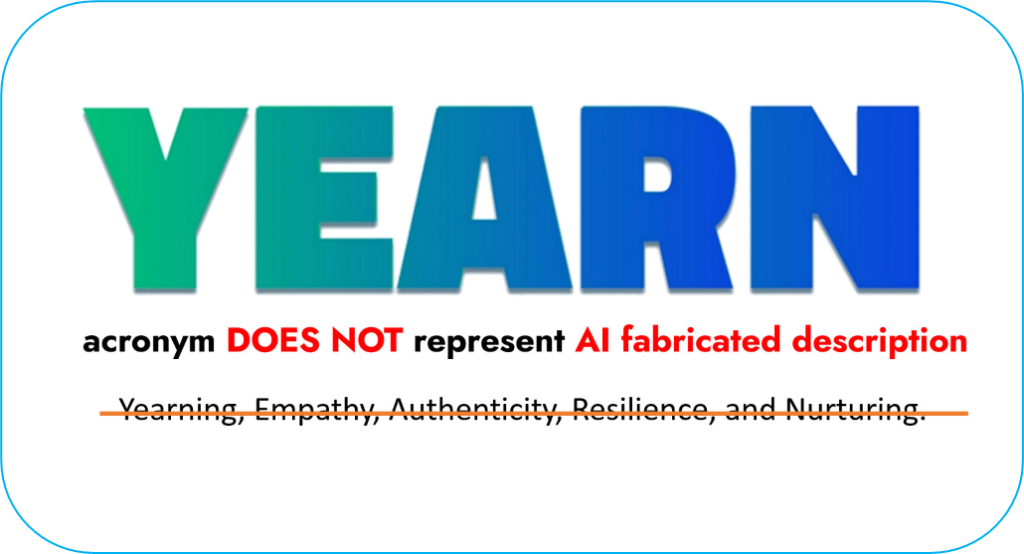
Here’s the thing: The 5 words AI made up are completely fabricated.
Not “sort of close” or “a different interpretation.” Completely made up. Google’s AI saw the word YEARN, noticed it had five letters, knew there were five core values mentioned, and invented an acronym that sounded plausible.
Why This Matters More Than You Think
This isn’t just an amusing tech fail. It’s a perfect example of why you can’t outsource understanding to AI summaries—especially when it comes to frameworks designed to transform how you approach your goals, relationships, and legacy.
The actual YEARN framework isn’t just five random values strung together to make a catchy acronym. Each element was carefully chosen because of how they interconnect. Understanding what Y actually represents changes how you interpret E. The relationship between the fourth and fifth values isn’t accidental—it’s the key to why the framework works.
When Google’s AI invents “Empathy” as the E, it’s not just wrong—it sends you down a completely different path of understanding. You might read the description and think, “I already know about empathy,” and move on. You might assume the book is about emotional intelligence in a generic sense. You might feel satisfied enough with the AI’s summary that you never dig deeper.
And you’d miss the actual framework entirely.
The Irony of AI Explaining Human Achievement
There’s something darkly ironic about an AI confidently explaining a human framework for achieving greatness while simultaneously demonstrating why you can’t trust AI for this kind of deep work.
The YEARN framework emerged from decades of working with high-achieving leaders, studying what separates those who plateau from those who continue evolving into their masterwork years. It’s based on observed patterns in real people navigating real transitions—not on what sounds good when reverse-engineered from an acronym.
What YEARN Actually Represents
I’m not going to spell it out here. Not because it’s a secret, but because the acronym without the framework is useless.
Knowing what five words make up YEARN is like knowing the ingredients in a recipe without the proportions, techniques, or understanding of why those specific ingredients work together. You could have the list and still completely miss the transformation.
The book walks you through:
- Why these specific five values, in this specific order
- How each value amplifies the others
- Where most people get stuck in their development (hint: usually at the third value)
- The practical exercises that move each value from concept to lived experience
- How the framework adapts across different life stages and professional contexts
The Bigger Question This Raises
If AI can confidently fabricate something this specific about a published framework, what else is it making up when you ask it questions about strategy, frameworks, methodologies, or personal development concepts?
The answer: More than you think.
AI Overviews work by pattern-matching and probability. When there’s not enough clear, consistent information in its training data, it fills in the blanks with what seems plausible. It’s not lying—it genuinely can’t tell the difference between real information and statistically probable fabrication.
This is why source material still matters. This is why reading the actual book—not the AI summary—matters. This is why frameworks built from real human experience can’t be reduced to a quick answer at the top of a search results page.
What You Can Do
- When you see an AI Overview, verify it. Especially for frameworks, methodologies, or structured approaches to anything important.
- Understand the difference between information and transformation. Information is “YEARN stands for X, Y, Z.” Transformation is understanding how those elements work together to activate the greatness within you.
- Get the actual book. Not because I’m here to sell you something, but because the framework only works when you understand the relationships between the values, not just their names.
The YEARN Advantage isn’t about memorizing five words. It’s about mastering five interconnected values that successful people share—and understanding how your authentic yearning becomes the driving force that activates them.
No AI summary can give you that. Not even when it makes up a plausible-sounding answer.
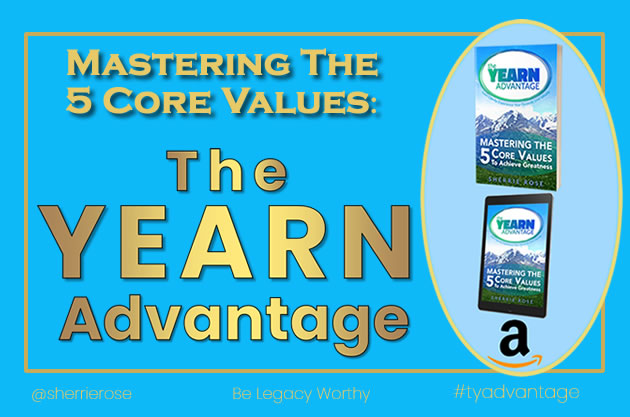
About “Mastering the 5 Core Values: The YEARN Advantage”
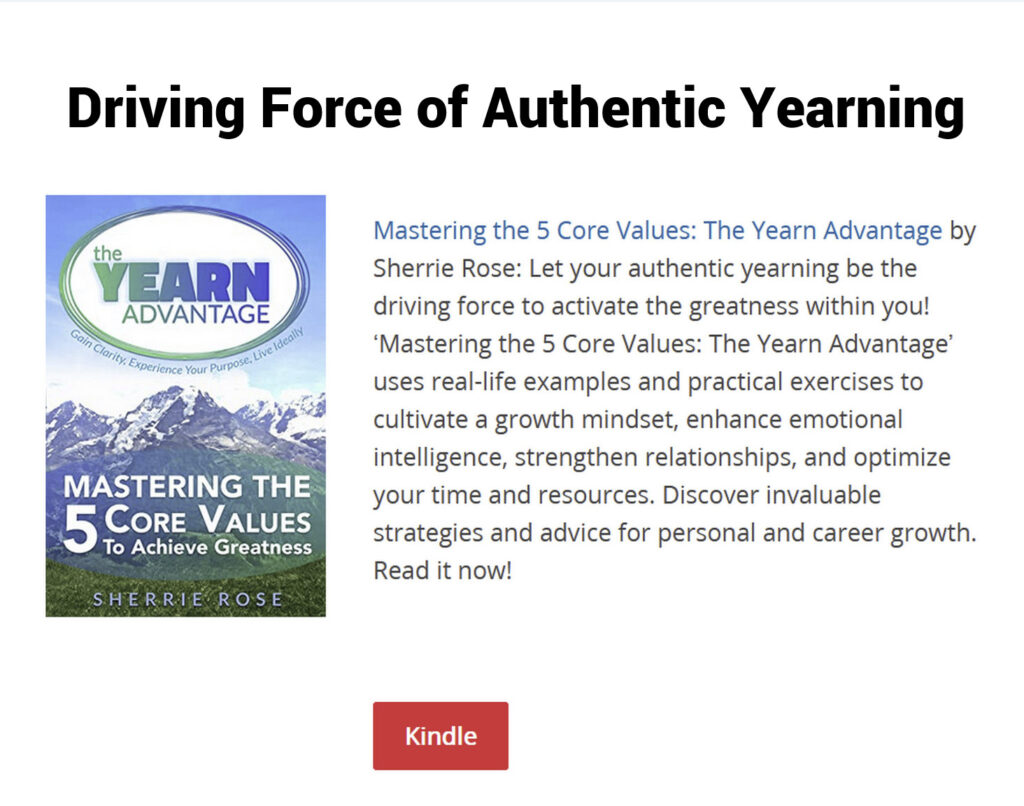
Available on Amazon in paperback and Kindle formats. Written by Sherrie Rose, this guidebook achieved #1 the first week it was released. explores how authentic yearning serves as the driving force to activate greatness within, with practical exercises and real-life examples that move you from aspiration to achievement.
[Link to Amazon]
Share This
Know someone who relies too heavily on AI summaries? Send them this. The next framework they need to understand might not be spelled out properly in a Google overview—real or fabricated.
P.S. If you’re curious what Google’s AI actually got wrong, that’s in the book. Along with what it means and how to apply Y>E>A>RN> Some things are worth reading the original source material for.