Between War and Peace, Power Reveals Its Truth
Between War and Peace, Power Reveals Its Truth
“Grant us the discipline to face war with sober clarity,
The patience to build peace with deliberate care,
The calm to move through the crossfire with caution,
The courage to close the divide through honest dialogue,
And the humility to wield power wisely, knowing it reveals intention.”
The Art of War, The Profession of Peace, and Closing the Divide
The Art of War
For centuries, leaders have studied The Art of War to sharpen strategy, strengthen positioning, and win decisive victories. Sun Tzu focused on clarity, preparation, intelligence, and disciplined execution. He taught leaders to know themselves, study their opponents, and act with precision. His principles continue to shape military doctrine, statecraft, and competitive strategy around the world.
Yet nations do not survive on victory alone. They survive on stability. They rely on people who prevent wars, contain crises, and turn confrontation into negotiation. These people practice a discipline that receives far less attention than warfare, but demands equal skill.
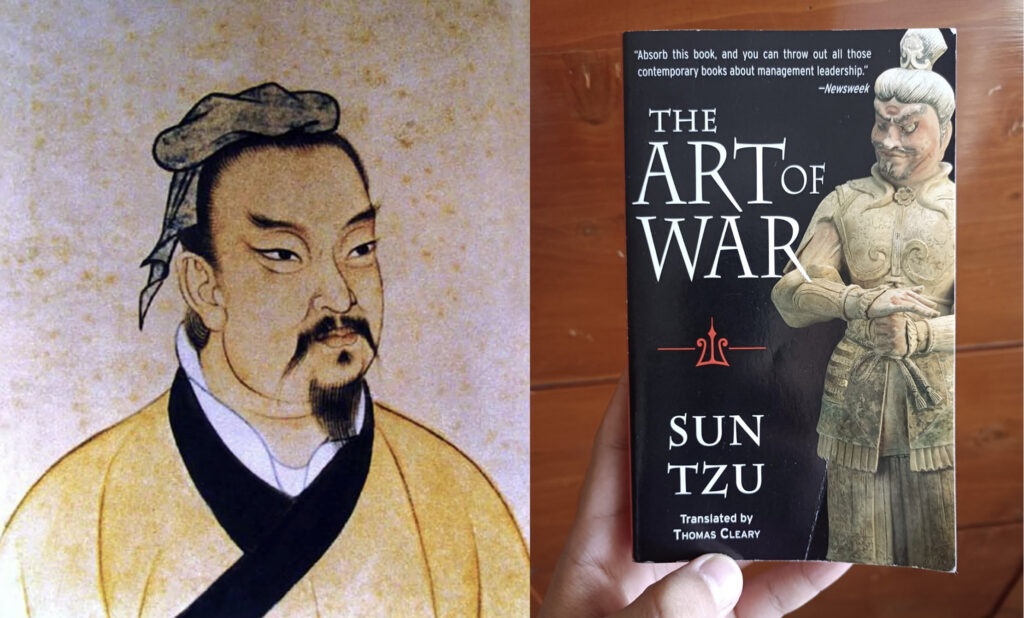
Sun Tzu’s famous quote:
If you know the enemy and know yourself, you need not fear the result of a hundred battles. If you know yourself but not the enemy, for every victory gained you will also suffer a defeat. If you know neither the enemy nor yourself, you will succumb in every battle.
The Profession of Peace
Professional diplomats stand on the front lines of prevention. Ambassadors represent national interests abroad and maintain constant dialogue with foreign governments. Foreign service officers analyze political risk, draft agreements, and manage sensitive negotiations. Special envoys shuttle between hostile parties to open channels when direct contact collapses. Treaty negotiators craft language precise enough to prevent miscalculation. Arms control experts verify compliance to reduce the risk of escalation.
Institutions such as the United Nations, the United States Department of State, and the European External Action Service employ diplomats who manage ceasefires, coordinate humanitarian access, and negotiate multilateral agreements. These professionals operate inside political systems shaped by national interest, power dynamics, and domestic pressure. They do not function as neutral referees above politics. They represent states. They defend policy. They carry institutional incentives, strategic priorities, and personal convictions into every negotiation.
This reality complicates the profession of peace. A diplomat may pursue de-escalation while also advancing geopolitical advantage. An envoy may seek stability while protecting national leverage. Bias, ambition, ideology, and career incentives can distort judgment. Peace negotiations can become arenas for influence rather than resolution.
Professionalism, therefore, cannot mean presumed objectivity. It must mean disciplined awareness of bias. It must mean clarity about mandate, transparency about interests, and restraint in the use of power. The strongest diplomats recognize their own incentives and manage them deliberately. They distinguish between advancing interest and provoking instability. They understand that durable peace requires legitimacy, not just leverage.
Diplomats do not drift into peace by accident. They prepare briefings, map power structures, assess leverage, and anticipate second- and third-order effects. They calculate how a single phrase in a communiqué can alter regional stability. They understand that misinterpretation can trigger mobilization. Their work demands restraint under pressure and clarity in ambiguity.
Sun Tzu wrote that the greatest victory requires no battle. Professionals of peace turn that principle into daily practice. They treat stability as a strategic objective and invest in the habits that sustain it.
Caught in the Crossfire
Between war and peace lies a dangerous middle ground. Here, neither declared war nor stable peace is a miscalculation that could thrive.
States rarely move directly from harmony to invasion. They move through phases: rising rhetoric, reciprocal sanctions, military posturing, alliance formation, cyber probing, economic pressure. Each action is justified as defensive. Each response is framed as necessary. Yet escalation often unfolds less through intent than through perception.
Diplomats working in these moments operate inside compressed timelines and incomplete information. Intelligence is partial. Political leaders demand decisive posture. Media narratives amplify fear. Domestic constituencies harden positions. Military planners prepare contingencies. Markets react to rumors.
Those tasked with de-escalation are frequently caught between urgency and ambiguity. A naval maneuver may be routine training — or strategic signaling. A missile test may be internal political theater — or preparation. A troop movement may be deterrence — or positioning.
In these moments, communication becomes the decisive variable.
Backchannels can prevent catastrophe. A clarified red line can prevent misinterpretation. A quiet reassurance can stabilize a border. Conversely, a poorly timed statement, a mistranslated communiqué, or a misread signal can trigger mobilization that no one initially intended.
History offers repeated examples of crises that nearly spiraled beyond control — moments when misunderstanding, pride, or rigid posture brought nations to the brink. What prevented disaster was not always superior force. Often, it was disciplined restraint and sustained dialogue.
To be caught in the crossfire is to operate amid forces larger than oneself: political pressure from above, strategic uncertainty from abroad, and moral tension within. The diplomat must remain calm while others posture. The mediator must absorb hostility without amplifying it. The negotiator must endure accusation while seeking common ground.
War is dramatic. Prevention is quiet. Yet in this narrow corridor between escalation and resolution, the work of peace is most urgent.
Closing the Divide
International divides form through fear, miscalculation, ideology, and competition for resources. Diplomats close those divides by maintaining communication even when trust erodes. They establish backchannels. They clarify red lines. They identify shared interests such as trade stability, counte-rterrorism, energy security, or regional balance.
Closing the divide requires structure. Negotiators define terms, sequence concessions, and link issues to create movement. Mediators convene adversaries in neutral settings and guide structured talks. Peacebuilders engage civil society to sustain agreements beyond signatures.
Conflict will continue to shape global affairs. Professionals of peace confront that reality directly. They channel rivalry into negotiation, negotiation into agreement, and agreement into monitored compliance. Their success rarely produces headlines, but it prevents them. In a world fluent in the language of war, they ensure that peace remains a practiced and defended craft.
War, Peace, and Power
The tension between war and peace ultimately returns to a deeper question: the nature of power itself.
In 1887, Lord Acton wrote the now-famous line:
“Power tends to corrupt, and absolute power corrupts absolutely.”
His warning has shaped political thought for generations. It suggests that authority degrades character, that concentration of control erodes virtue, and that systems must restrain leaders to prevent moral decay.
Yet another perspective challenges this view (often attributed to Anthony Hokpins).
Power does not necessarily transform a person into something new. Instead, it removes restraint. When consequences fade and authority increases, character becomes visible.
The just individual, when empowered, extends protection and fairness.
The ambitious individual, when unchecked, may exploit opportunity for personal gain.
The insecure individual, freed from fear, may dominate others to silence inner weakness.
Power is not only a corrupting force. It is a revealing force. It exposes what was always present beneath caution, social pressure, or fear of accountability. When there is nothing left to lose, nothing left to fear, the mask falls away, and the true nature of a person stands uncovered.
This insight applies equally to generals and diplomats. Authority magnifies intention. Influence amplifies character. Systems matter and so do the individuals operating within them.
War demonstrates how power can be used. Peace demonstrates how power can be restrained.
The art of war teaches leaders how to win.
The profession of peace teaches them when not to fight.
Wisdom lies in knowing that both require discipline — and that the greatest strength may be the power one chooses not to use.
###
See also documentary on Sun Tzu