Meet Baby Globe, Face of Wikipedia. The Wild Dream Turns 25.
Wikipedia Was Just A Dream in 2021
If you’re reading this, you’ve probably used Wikipedia.
Maybe to satisfy a curiosity. To settle an argument. To learn something new at 3 in the morning or 3 in the afternoon. Wikipedia is accessible when you need it with no login, no paywall, no algorithm deciding what you see first.
But here’s what most people forget: In 2001, Wikipedia was just a dream. A wildly ambitious, probably-too-idealistic dream.
Think about what they were proposing: an encyclopedia anyone could edit. Free knowledge for everyone. No ads. No subscriptions. Built entirely by volunteers who believed in something bigger than themselves.
Every expert said it wouldn’t work. How could you trust crowd-sourced information? Who would maintain quality? How would it sustain itself without revenue? The skeptics had a point — and yet.
The dream had vision. The vision found purpose. The purpose created a mission.
And piece by piece, edit by edit, article by article, the dream became real.
Twenty-Five Years Later
On January 15, 2026, Wikipedia turned 25. As of that birthday, the platform hosts over 65 million articles across 300+ languages, informing everything from everyday curiosity to AI research, journalism, trivia nights, and academic papers.
The dream didn’t just survive — it became essential infrastructure for how billions of people access knowledge. And to mark the occasion, the Wikimedia Foundation did something quietly remarkable: they gave the dream a face.
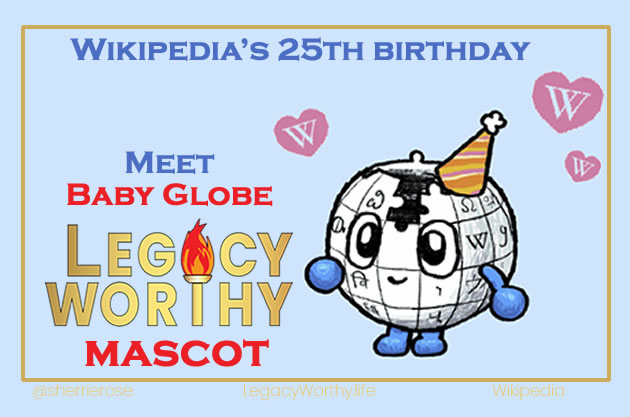
Meet Baby Globe
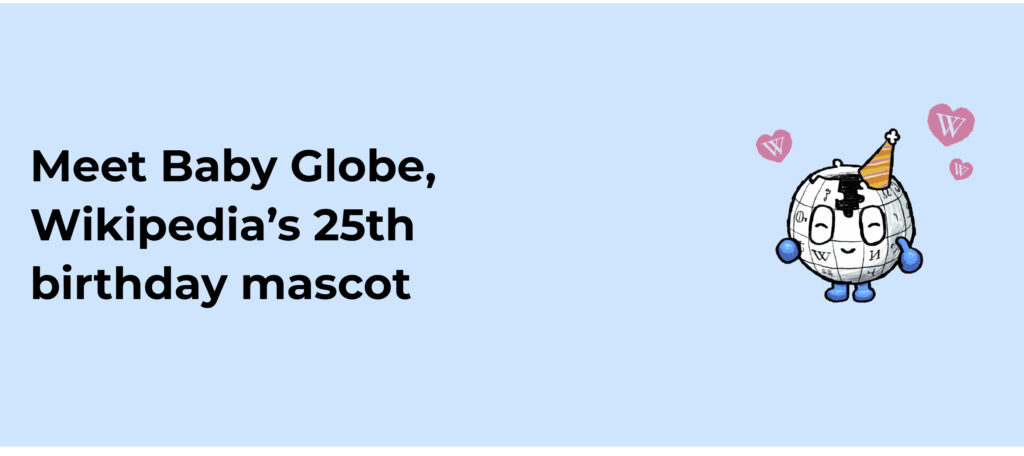
Baby Globe is Wikipedia’s official 25th birthday mascot — a small, round, globe-shaped character with blue limbs, nub-like hands, wide curious eyes, and a slightly open mouth frozen in an expression of pure wonder. The design leans into a hand-drawn, sketchy aesthetic with an unrefined outline, drawing inspiration from the rubber-hose animation style popular in the 1920s. Part vintage cartoon, part internet icon, Baby Globe looks like the kind of character who would fall down rabbit holes on purpose.
Which, honestly, feels exactly right for Wikipedia.
What makes Baby Globe’s origin story so fitting is that it mirrors Wikipedia itself: it started not with a committee or a brand strategy, but with one person doing something they enjoyed.
A Sketch on the Train
Jonathan Ferreira — known in the Wikipedia community by his username BaduFerreira — drew the original sketch during his commute home. It was casual. Unplanned. He was doodling, not designing.
He shared early drafts with his girlfriend, calling it “the little mascot,” with no name and no grand intention. When others started calling it Baby Globe, the name stuck — and Ferreira leaned into it. “Baby” captures the character’s small stature and open-eyed curiosity. “Globe” ties it directly back to Wikipedia’s iconic puzzle-globe logo, now given limbs and personality.
The design evolved from there. Ferreira experimented with regional imagery — Bay Area references, geographic landmarks — but nothing felt universal enough. He kept coming back to the Wikipedia globe itself, adding character until the mascot almost emerged on its own terms.
Eventually, his sketch made its way to the Wikimedia Foundation, where designers Sharon Park, Axel Kinnear, and Bex McNally adapted it for official use. What started on a train became the face of a global anniversary campaign.
From Sketch to Global Character
Baby Globe’s debut came on January 15, 2026 — Wikipedia’s official birthday — as a quiet cameo on the Wikipedia landing page. Then, from February 16 onward, it began appearing as part of “Birthday Mode,” a toggleable feature that lets readers activate playful, visual Easter eggs as they browse. Hidden surprises. Small delights tucked into the corners of articles.
Beyond the digital world, Baby Globe became a limited-edition plushie in collaboration with Makeship, a cuddly, collectible companion for anyone who has ever gotten happily lost in a Wikipedia spiral at midnight.
Ferreira reflected on the unexpected scale of it all: “I had no intention for this thing to become as big as it has. It’s kind of cool that I just drew this thing and now it could be seen by people across the world.”
The Pattern Behind Both Dreams
There’s a thread running through all of this — through Wikipedia’s founding, through Ferreira’s commute sketch, through Baby Globe finding its way onto screens in dozens of languages.
What separated these dreams from the thousands of ideas that never happen?
They moved from imagination to integration. From “wouldn’t it be amazing if” to “here’s what we’re building together.”
The people who built Wikipedia made daily choices guided by a vision extending decades beyond immediate results. They built for a future they couldn’t fully see but clearly imagined. Ferreira did the same thing on a smaller scale — not building for legacy, just following what interested him, putting himself in environments that felt right, not knowing what dividends might come.
This is what Sherrie Rose calls enhavim: purpose and mission led by vision.
Not every person who ever dreamed of free universal knowledge built Wikipedia. But the people who did shared something specific: they found the bridge from dreaming to doing.
What Baby Globe Represents
On the surface, Baby Globe is a birthday mascot: cute, charming, a fun addition to Wikipedia’s anniversary year.
But look a little closer and it’s something else: a symbol of what happens when a community stays true to its original dream long enough to celebrate it.
Wikipedia at 25 is still free. Still ad-free. Still volunteer-powered. Still growing. Baby Globe doesn’t just celebrate 25 years of articles — it celebrates 25 years of people choosing, every single day, to keep the dream alive through small acts of contribution.
One edit. One article. One sketch on a train.
Your Significant Dream (Dream to Enhavim)
What’s the dream you keep setting aside — the one that seems too big, too ambitious, too far beyond what anyone thinks is realistic?
Wikipedia started as exactly that kind of dream. Baby Globe started as a doodle with no name and no plan.
Both became real because someone stopped waiting for perfect conditions and started building.
Most people keep their dreams separate from their daily reality. They wait for someday. The right moment. Enough resources or confidence.
A few will make a different choice.
Whatever you’re imagining: the book, the business, the contribution you want to make, it’s not waiting for perfect conditions. It’s waiting for you to bridge the space between dreaming and creating.
To connect your biggest visions to your smallest daily decisions.
To discover your enhavim.
Wikipedia started as a significant dream. Baby Globe started as a casual sketch. Both became real (digital real) because someone decided to begin.
Source:
Inspired by Wikipedia Was Just A Dream and the Wikipedia 25th Birthday Mascot — Baby Globe, original illustration by BaduFerreira, adapted by Sharon Park, Axel Kinnear, and Bex McNally for the Wikimedia Foundation (CC-BY-SA 4.0).